The detection of illegal vehicles operating in total darkness poses a critical challenge for law enforcement and security personnel. Traditional optical surveillance systems, such as standard visible-light cameras, become completely ineffective when ambient light is absent. Even near-infrared illuminators often fail to provide sufficient contrast, especially when vehicles are moving or when the target is shielded by darkened or tinted windows. Thermal imaging cameras, while capable of detecting heat signatures, struggle to identify specific individuals, license plates, or contraband inside a vehicle due to low thermal contrast and the masking effect of glass. The fundamental pain point lies in the inability to visually confirm the nature of an illegal activity—be it smuggling, unauthorized entry, or traffic violations—without alerting the subject. In such scenarios, officers are forced to rely on risky physical approaches or delayed intelligence, increasing both operational danger and the likelihood of escape. The penetrating imager offers a breakthrough solution to this exact problem by enabling clear visual acquisition in zero-light conditions.
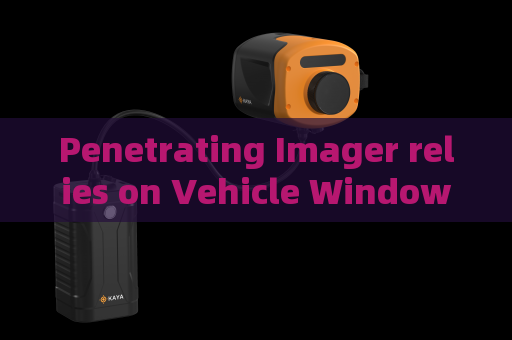
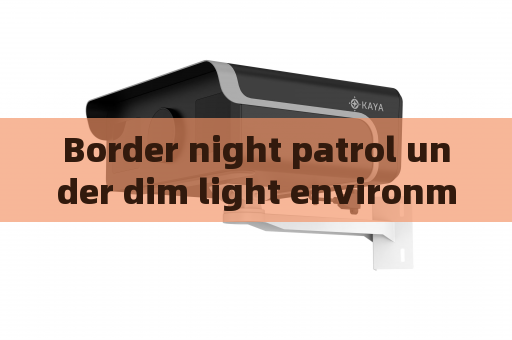
The penetrating imager is an advanced optical instrument based on laser range-gated imaging technology, also known as gated imaging. It comprises a high-frequency pulsed laser, an intensified gated camera (incorporating an MCP image intensifier, high-voltage module, and timing module), a beam expander, and an imaging lens. Unlike passive sensors, this active imaging system emits short laser pulses and synchronizes the camera’s gate to capture only the light reflected from a specific distance, effectively eliminating backscatter from atmospheric particles and optical surfaces. This unique capability allows the penetrating imager to see through optical media such as vehicle windshields, side windows, and even aircraft portholes. In total darkness, it produces high-contrast, high-resolution images that reveal interior details—driver identity, passenger movement, items on seats, or even weapons—without emitting any visible signature that would tip off the subject. The technology operates purely within the optical spectrum and does not rely on X-rays, radio waves, or thermal radiation, ensuring compliance with strict non-invasive detection protocols.
In real-world operations, the penetrating imager dramatically enhances the effectiveness of illegal vehicle interdiction. A patrol unit stationed at a highway checkpoint or in a dark urban alley can deploy the system from a covert position, scanning approaching vehicles from a distance. Because the imager works in zero-light conditions and can penetrate standard automotive glass, it allows officers to assess the situation inside a target vehicle before any physical contact is made. For example, during a nighttime smuggling interdiction, the operator can clearly see whether the driver is alone or accompanied, whether cargo is concealed under seats, and whether any hand gestures indicate aggressive intent. The high frame rate and resolution enable real-time monitoring of movement, even at speeds up to 60 km/h. Moreover, the laser’s narrow bandwidth makes the system virtually undetectable to the suspect’s own night-vision devices, preserving tactical surprise. The penetrating imager thus transforms a previously blind spot into a decisive advantage, reducing the need for risky traffic stops and increasing the probability of successful apprehension.
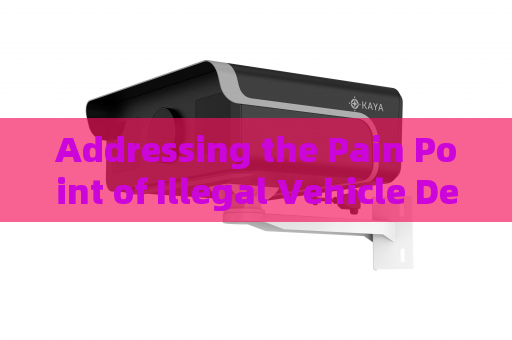
When deployed as a standalone unit or integrated into vehicle-mounted platforms, the penetrating imager also supports advanced operational flexibility. Operators can adjust the gate delay and pulse width to focus on different depths—for instance, scanning through a front windshield to observe the driver while ignoring reflections from the dashboard. In scenarios involving heavy fog, rain, or smoke, the gating mechanism selectively rejects the scattered light from these optical interferences, maintaining image clarity that conventional cameras cannot match. It is critical to note that the penetrating imager is limited to optical media such as glass and cannot penetrate solid barriers like walls or metal; however, for illegal vehicle detection, this precise capability is exactly what is needed. By providing a non-contact, zero-light imaging solution that penetrates the vehicle’s transparent barriers, the penetrating imager directly addresses the most stubborn pain point in nighttime law enforcement: seeing the unseen without being seen.