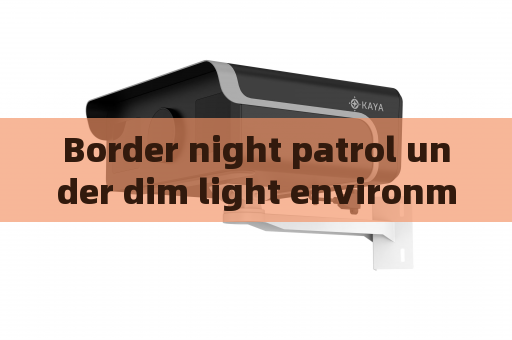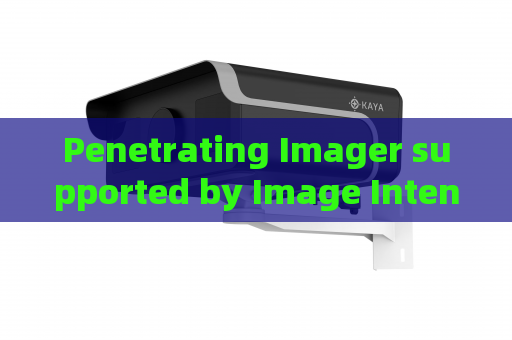
Non-Stop Screening Solution of the Penetration Imager with Through-Window Imaging for Rapid Vehicle Inspection in Bonded Zones In bonded zones where high-value goods and sensitive cargo are routinely transported, vehicle inspection presents a persistent operational bottleneck. Traditional methods require drivers to stop, roll down windows, and submit to manual checks or hand-held mirrors, creating delays that disrupt logistics flow. More critically, heavily tinted windows, reflective coatings, or aftermarket modifications often obscure the vehicle interior, making it impossible for security personnel to verify occupants, hidden compartments, or unauthorised items without physical intrusion. This stop-and-search approach not only slows throughput but also exposes officers to safety risks when approaching suspicious vehicles. The core pain point is the trade-off between inspection thoroughness and the need for continuous, non-intrusive screening at speed—a gap that conventional optical devices, relying on ambient light, cannot bridge. The Penetration Imager addresses this challenge through its unique through-window imaging capability, allowing security teams to see inside a vehicle without forcing it to halt. As an active optical imaging system based on laser range-gated imaging technology, the device incorporates a high-repetition-rate pulsed laser, an intensified gated camera with an MCP image intensifier, a beam expander, and an imaging lens. It emits short laser pulses and synchronises the camera’s shutter to receive only the light reflected from the target plane, effectively gating out backscatter from the glass surface and atmospheric particles. This design enables the Penetration Imager to penetrate common automotive glazing—including windshields, side windows, and even aircraft-style panes—while rejecting reflections and ambient glare. The result is a high-contrast image of the vehicle’s interior, captured in real time, regardless of window tint, dirt, or external lighting conditions such as fog, rain, or direct sunlight. Deployed at checkpoint lanes in bonded zones, the system operates in a non-stop screening mode. Vehicles simply drive through the inspection zone at normal speed, and the Penetration Imager, mounted on gantries or lateral stands, automatically acquires images of the cabin and cargo area through the windows. The laser-based active illumination ensures consistent image quality even when the vehicle is moving, and the range-gating mechanism compensates for varying distances and vehicle heights. Security personnel view the live feed on a monitor, spotting anomalies—such as concealed passengers, modified seats, or oversized luggage—without any physical contact or delay. This rapid vehicle inspection process reduces per-vehicle check time from minutes to seconds, dramatically increasing throughput while maintaining a high level of threat detection. Operationally, the Penetration Imager integrates seamlessly with existing license plate recognition and barrier systems. As a vehicle approaches, the trigger signal activates the laser and camera, capturing a sequence of frames through the front windshield and side windows. The system’s ability to overcome backscatter from rain or mist means that inspection remains reliable even in adverse weather. Importantly, the Penetration Imager is strictly an optical imaging tool—it does not rely on any form of radiation or non-optical waves, and it cannot see through opaque materials such as metal, concrete, or fabric. Its design is purpose-built for the specific requirement of transparent medium penetration, making it an ideal solution for the bonded zone environment where rapid, non-contact vehicle screening is paramount. The technology not only enhances officer safety by eliminating the need for close approach but also upholds the continuous flow of legitimate commerce through secure checkpoints.