In high-speed pursuit scenarios, law enforcement officers face a critical bottleneck: accurately identifying the occupants inside a fleeing vehicle before it escapes or becomes a threat. Conventional optical cameras—dashcams, patrol vehicle roof-mounted systems, or handheld binoculars—are routinely defeated by environmental and vehicular factors. Tinted windows, rain-soaked glass, heavy condensation, or layers of road grime obscure facial features. Sunlight glare and headlight reflections create blinding hotspots that wash out details. Even in favorable light, the rapid motion of the vehicle, combined with unpredictable angles as it swerves through traffic, makes it nearly impossible to capture a clear, frame-usable image of the driver or passengers. Thermal imagers can detect heat signatures through glass, but they lack the resolution for facial recognition and fail when windows are rolled down or when the vehicle interior is cooled by air conditioning. This gap in real-time remote identification forces officers to resort to risky close-proximity stops or to lose the suspect entirely—a problem that directly undermines operational safety and investigative efficiency.
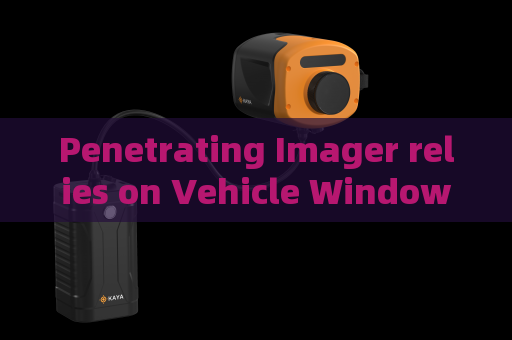
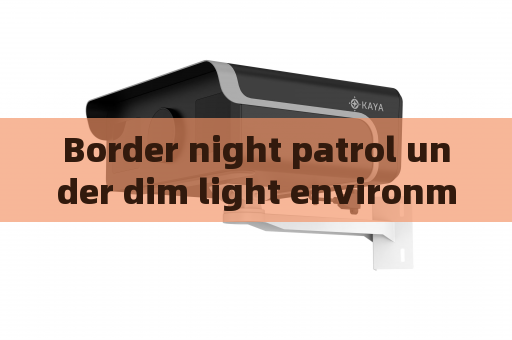
The Penetrating Imager directly addresses these challenges by leveraging laser range-gated imaging technology. Unlike passive cameras that rely on ambient light, this active imaging system emits high-repetition-rate pulsed laser light and synchronizes a gated intensified camera to capture only the photons returning from a precise distance band. The system consists of a pulsed laser, an image intensifier with microchannel plate (MCP), a high-voltage module, a timing control unit, a beam expander, and an imaging lens. By setting the gate delay to match the distance to the vehicle, the imager effectively rejects all backscatter from rain, fog, or airborne particles, as well as reflections from the windshield or side windows. The glass itself becomes optically transparent to the system: the laser pulse passes through, reflects off the occupant's face or clothing, and returns through the same glass, while the stray light from the glass surface is temporally gated out. This allows the Penetrating Imager to produce high-contrast, high-resolution images of occupants even through heavily tinted, wet, or dirty glass, and under strong sunlight head-on.
In practical police operations, the Penetrating Imager can be deployed from a trailing patrol vehicle or a stationary observation post at a safe standoff distance. Officers aim the device at the fleeing car's windshield or side windows while maintaining a parallel or slight offset trajectory. The operator adjusts the gate timing on a handheld control unit—typically a ruggedized tablet or dedicated keypad—to lock onto the vehicle's range. Once locked, the imager continuously updates the gate delay to track the moving target, delivering real-time video or still frames of the occupants. These images are clear enough for immediate visual comparison with a wanted-person database, or for transmission to a command center where facial recognition software can process them. The system works equally well at night, using near-infrared laser wavelengths that are invisible to suspects, preserving tactical surprise. During a pursuit, this capability enables officers to confirm the driver's identity, verify the number of occupants, and detect weapons or other visible items inside the cabin—all without closing the distance and escalating risk.
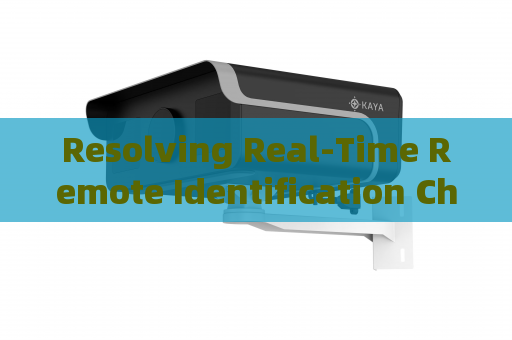
Operational details further illustrate the Penetrating Imager's suitability for this single, high-stakes scenario. The gate width—typically adjustable from nanoseconds to microseconds—determines the depth of the imaged slice. A narrow gate isolates a thin plane, such as the driver's face, while a wider gate captures the entire front seat. The pulsed laser's repetition rate, often in the kilohertz range, ensures smooth video output without flicker. The intensified camera's MCP provides gain sufficient to amplify weak return signals from dark clothing or low-reflectivity skin tones, while the high-voltage module maintains stable performance across temperature extremes encountered during prolonged pursuits. The beam expander spreads the laser to a safe, non-eye-hazardous divergence at the working distance, and the imaging lens offers optical zoom to frame the subject precisely. In fire- or smoke-affected environments—for instance, a vehicle trailing through a brushfire zone—the Penetrating Imager can improve visibility by three to five times, though it cannot penetrate thick smoke. For the core task of resolving real-time remote identification challenges for occupants in fleeing vehicles, the Penetrating Imager stands as a purpose-built solution that transforms a persistent vulnerability into an actionable intelligence stream.