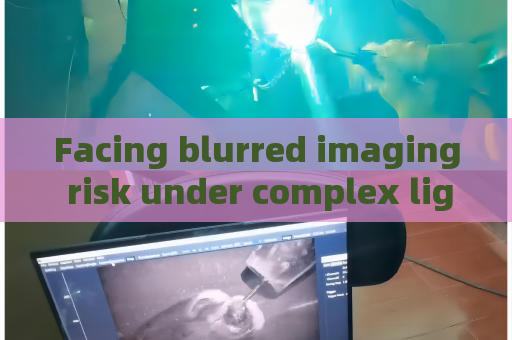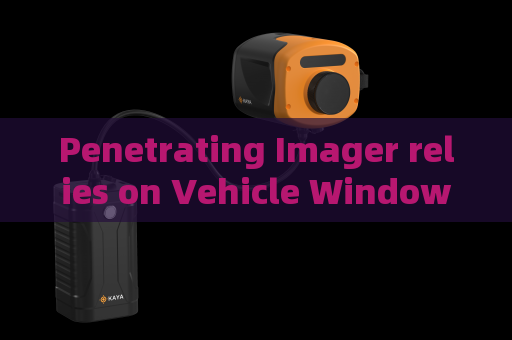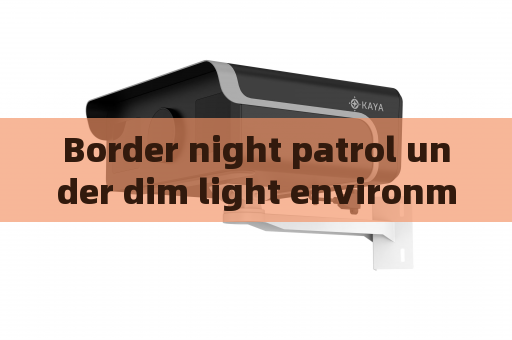
Precise Location of Trapped Victims by the Penetration Imager When Flames Obstruct Vision at Fire Scenes with Fire Penetration Imaging In a structure fire, the most critical factor for rescue teams is locating victims who are incapacitated or disoriented behind thick, rolling flames. Standard thermal imagers, while valuable for detecting heat signatures through smoke, become completely blind when direct flame sheets or intense fire cones block the line of sight. Firefighters often have to guess the victim's position based on sound or secondary indicators, leading to costly delays. The real problem is that flames—being self-luminous, moving, and highly scattering—create a dense optical barrier that conventional cameras and even many specialized sensors cannot penetrate. This visual obstruction forces rescue crews to either wait for the fire to subside or risk entering a fully involved compartment without confirmed victim coordinates, increasing both rescue time and responder danger. The need for a tool that can see through the fire curtain itself, not just around it, has been a long-standing gap in fireground operations. The penetration imager addresses this specific obstacle by employing laser range-gated imaging technology. Unlike passive optical devices that capture ambient light, this advanced system actively fires short-duration, high-repetition-frequency laser pulses toward the target area. The imager’s intensifier-based gated camera opens only for a precise time window matching the round-trip flight time of the laser light reflected from the victim or objects behind the flames. Because the gating effectively rejects scattered light from the fire’s foreground—the flames themselves—the system retrieves a clear image of the scene beyond. It does not rely on heat or sound; it works purely with reflected laser photons. At a fire scene, this means the penetration imager can see through a wall of fire up to three to five times farther than the naked eye, providing a distinct visual representation of human silhouettes, furniture, or openings that would otherwise be invisible through the roaring orange barrier. During actual deployment, the penetration imager is mounted on a tripod or handheld by a designated team member positioned at a safe vantage point, such as a doorway or a window opening. The operator scans the involved compartment, and the system displays near real-time, high-contrast images on a ruggedized screen. Even when flames completely obscure direct vision, the imager’s ability to time-gate out the fire’s luminous layer allows the rescuer to identify the precise location of a trapped victim—for example, a person lying prone on the floor behind a burning sofa. The device can also distinguish between a victim and a piece of debris because the laser return from a human torso has a distinct shape and reflectivity. Once the coordinates are marked, the incident commander directs an attack crew along the shortest, safest path to the victim, bypassing unnecessary search loops. A deeper operational detail involves the penetration imager’s sensitivity to optical media. It excels when the line of sight passes through glass panes or acrylic barriers that might be cracked or warped by heat, as well as through moving flames. However, it must be noted that this imager cannot see through thick smoke; if the fire is primarily a low-oxygen smoldering phase with heavy soot, thermal imagers remain the primary tool. The penetration imager’s true value is limited to the precise moment when flame sheets block vision—a common scenario in flashover conditions or vented fires. By focusing solely on this one window of opportunity, rescue teams gain a decisive tactical advantage. The penetration imager thus becomes the definitive instrument for pinpointing victims when every second of delay could mean the difference between life and death, ensuring that no person behind the flames remains undiscovered.