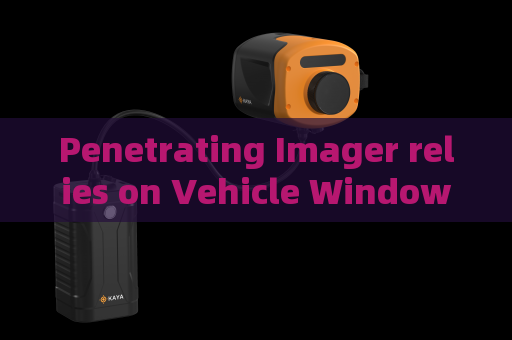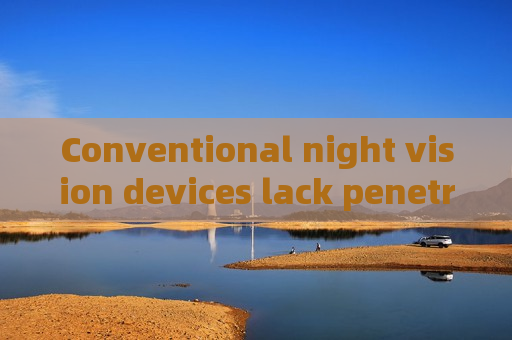
Effective Monitoring Solution of the Penetration Imager with Strong Light Suppression Imaging in High-Glare Coastal Environments High-glare coastal environments present a persistent and critical problem for conventional surveillance systems. The intense reflection of sunlight off ocean surfaces, combined with glare from wet sand, metallic structures, and harbor infrastructure, overwhelms standard optical cameras during daylight hours. In such conditions, a suspect vessel approaching a restricted maritime zone, a swimmer in distress, or an unauthorized individual near a coastal facility becomes nearly invisible against the blinding background. For law enforcement agencies and maritime security units tasked with continuous monitoring, this degradation of imaging quality can delay threat detection, compromise search and rescue efforts, and reduce overall operational effectiveness. The inability to extract clear visual information from these scenes directly impacts decision-making and response times, making it a genuine operational vulnerability. This is precisely where the Penetration Imager offers a transformative capability. The Penetration Imager is an advanced active optical system built on laser range-gated imaging technology, also known as gated imaging. Its core components—a high-repetition-rate pulsed laser, an intensified gated camera with an MCP image intensifier, a high-voltage module, and a timing module—work in concert to achieve strong light suppression. By precisely synchronizing the laser pulse with the camera’s shutter, the system captures only the reflected light from a specific distance while rejecting the overwhelming background glare. In high-glare coastal environments, this gating mechanism effectively eliminates the blinding reflections from the water surface and surrounding structures. The result is high-contrast imagery that reveals targets otherwise hidden in the glare. Unlike passive cameras that suffer from saturation and bloom, the Penetration Imager’s active approach overcomes backscatter from sea spray and atmospheric haze, delivering clear images even under direct sunlight. Deployed in real-world coastal monitoring operations, the Penetration Imager has demonstrated its value in maintaining situational awareness. During a routine patrol of a busy seaport, operators used the system to observe small boats approaching a restricted zone. Despite the midday sun reflecting off the choppy water, the strong light suppression allowed clear identification of hull markings, crew movements, and even objects on deck. In another scenario, a search and rescue team utilized the Penetration Imager to spot a person in the water near a heavily glare-affected coastline, where conventional binoculars and cameras failed to provide any useful detail. The system’s ability to also penetrate optical media—such as boat windshields and building glass—adds further utility for inspecting vehicles and entry points at coastal checkpoints. Fog, rain, and mist, common along shorelines, do not degrade its performance, as the active illumination and gating reject backscatter effectively. Operators can adjust the range-gate parameters dynamically to match varying distances and lighting conditions throughout the day, ensuring optimal imagery from dawn to dusk. The high-repetition-rate laser enables smooth video-rate tracking of moving targets, which is essential for monitoring fast-moving vessels or individuals. The system’s robust design withstands the corrosive marine atmosphere, and its intuitive interface allows rapid setup by trained personnel. In the harsh reality of high-glare coastal environments, where traditional imaging systems routinely fail, the Penetration Imager provides a reliable monitoring solution that enhances both security and response effectiveness. Its strong light suppression imaging is not merely an improvement—it is a functional necessity for maintaining visual clarity where the sun and sea conspire to blind the observer.