Large-scale vehicle gatherings, such as motor shows, parades, or sports events, present a unique security dilemma: how to screen hundreds of moving cars without causing gridlock. Traditional methods force every vehicle to stop at a checkpoint, where guards visually inspect windows or manually search trunks. This process creates long queues, driver frustration, and vulnerabilities—attackers may exploit stopped traffic as a bottleneck. Even with canine units or handheld mirrors, the need for physical proximity limits throughput and exposes personnel to danger. The real pain point lies in balancing thorough inspection with seamless flow. A solution must see inside a moving vehicle without requiring it to halt, all while overcoming reflections, tinted glass, and adverse weather. The Penetration Imager offers a path forward.
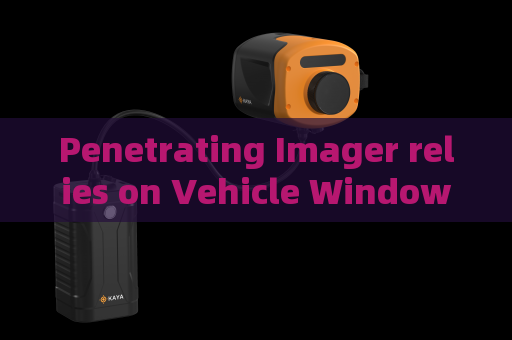
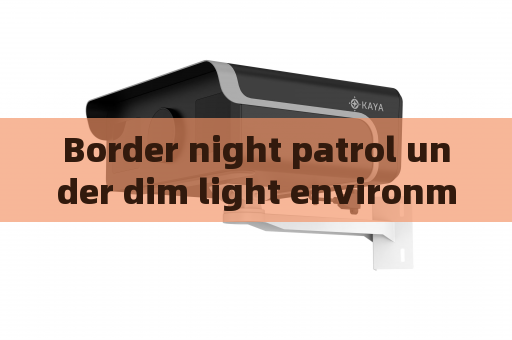
The Penetration Imager is an advanced optical imaging system based on laser range-gated imaging technology. It employs a high-repetition-rate pulsed laser, an intensified gated camera with an MCP image intensifier, high-voltage modules, and timing boards, along with a beam expander and imaging lens. As an active imaging system, it achieves high-contrast imagery with long range, high resolution, and strong immunity to interference. Critically, it overcomes backscatter from rain, fog, or dust. The key function for vehicle screening is its ability to penetrate optical media—specifically, automotive window glass. Unlike passive cameras that fail when faced with darkly tinted windows or glare, the Penetration Imager sends short laser pulses and synchronizes the camera’s shutter to capture only light returning from behind the glass, rejecting scattered photons. This allows it to form a clear image of the vehicle’s interior—seats, cargo area, occupants—while the car is in motion. The system cannot see through metal, concrete, or fabric, but it does not need to; the goal is to inspect the cabin and trunk through glass.
In practice, security teams deploy the Penetration Imager at a fixed gantry or roadside position along the entry lane. Vehicles pass at normal speed, typically 10–30 km/h. The imager automatically triggers upon detecting a target, capturing a sequence of frames as the car moves through its field of view. Operators monitor a display that shows a real-time, clear image of the front windshield, side windows, and rear glass—even in heavy rain, fog, or at night. The system can be integrated with license plate recognition and alarm algorithms to flag suspicious objects, such as weapons, bulky containers, or individuals hiding under seats. Because there is no stop, a single lane can process 500–800 vehicles per hour, compared to 50–100 with traditional manned checks. The Penetration Imager’s ability to ignore fire, smoke, or sunlight reflections further ensures consistent performance in outdoor venues. This transforms security screening from a disruptive choke point into a non-intrusive, continuous process that respects event logistics.
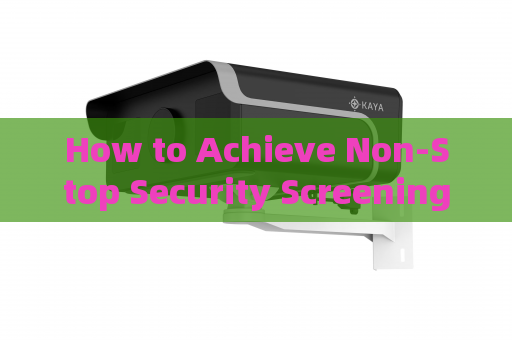
The system’s operational details highlight its suitability for large gatherings. Each unit covers a single lane, and multiple units can be arranged side by side for multi-lane access. Calibration is straightforward: the imager is angled slightly downward to capture the interior through the windshield and driver-side window. During a parade or motorcade, vehicles do not need to slow down—the gated laser pulses adjust to vehicle speed automatically, ensuring sharp images regardless of velocity. Maintenance is minimal, as the solid-state laser and camera have long lifespans. The Penetration Imager’s non-stop capability eliminates the need for secondary screening unless an anomaly is detected, reducing personnel requirements. By integrating this device into existing entry protocols, organizers achieve a security posture that is both rigorous and invisible to attendees, who simply drive through without interruption. This is the precise answer to the question of how to achieve non-stop security screening for large-scale vehicle gatherings.