At customs checkpoints, the demand for swift yet thorough security screening of vehicles and cargo is constant. Conventional methods—such as physical inspection, canine detection, or stationary X-ray scanners—often create bottlenecks, require significant manual labor, or impose delays that disrupt legitimate traffic flow. The most challenging blind spot lies in the inspection of vehicle cabins, trunks, and compartments behind standard automotive glass. Suspicious items, concealed contraband, or unauthorized occupants hidden inside a vehicle can remain invisible to the naked eye, especially under low-light conditions, tinted windows, or adverse weather. Officers must balance speed against thoroughness, yet any missed threat carries severe security consequences. This persistent tension between efficiency and detection capability defines the core problem at modern customs checkpoints.
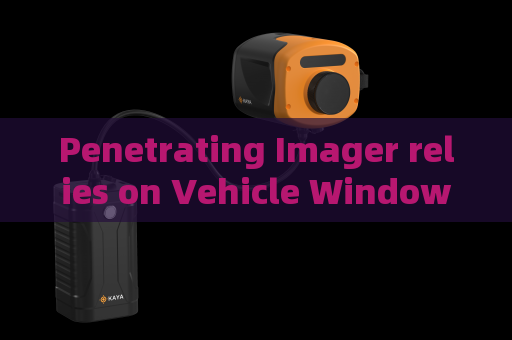
The penetration imager directly addresses this operational gap. Built on laser range‑gated imaging technology, the system employs a high‑repetition‑rate pulsed laser, an image intensifier gated camera with an MCP image intensifier, a beam expander, and an imaging lens. As an active imaging system, it emits short laser pulses and synchronizes the camera’s shutter to capture only the light reflected from the target at a specific distance. This gating mechanism effectively rejects backscatter from fog, rain, snow, haze, or airborne particulates, yielding high‑contrast, high‑resolution images even through standard automotive glass. The device achieves long‑range, clear visualization of interior spaces—such as seats, floor areas, and cargo regions—without requiring the vehicle to stop for extended periods or its occupants to exit. The image is produced entirely within the optical spectrum, with no reliance on X‑rays, radio waves, or other prohibited detection modalities.
At the checkpoint, the penetration imager is deployed on a mobile platform or fixed gantry lane. As the vehicle rolls slowly past at normal approach speed, the operator triggers a short acquisition sequence. The system’s active laser illumination pierces the windshield, side windows, or rear glass, returning a real‑time video feed to the viewing screen. Officers see the subtle outlines of packages, containers, or persons that would otherwise be hidden by glare, tinting, or darkness. The process is entirely non‑intrusive and takes only a few seconds per vehicle, preserving traffic throughput while raising detection confidence. Rain‑soaked windows or fog‑shrouded perimeters do not degrade the image; the range‑gating technology cuts through such optical interference, making the tool reliable in diverse climates and shift conditions.

This capability transforms a previously reactive, labor‑intensive inspection into a proactive, high‑speed screening step. The penetration imager becomes a force multiplier, allowing a single customs officer to scan dozens of vehicles per hour without opening doors or lifting cargo. False alarms from shadows or reflections are drastically reduced because the system sees through the glass with optical clarity. The technology’s strict adherence to optical‑media penetration—limited to vehicle glass, train windows, aircraft windows, and glass curtain walls—ensures no confusion with wall‑penetrating radar or X‑ray systems. Every scan remains within the boundaries of light‑based imaging, meeting legal and operational constraints at international borders. For customs authorities seeking rapid, non‑intrusive security checks, the penetration imager delivers a precise, efficient, and field‑proven solution that addresses the most persistent visual blind spot in vehicle inspections.