During high-risk vehicle interdictions, such as hostage situations or armed suspect barricades, law enforcement operators face a critical dilemma: they must visually assess the interior of a vehicle to determine threats, yet approaching the vehicle places them within lethal range of a concealed attacker. Standard optical tools like binoculars or monoculars fail to see through tinted or reflective automotive glass, forcing officers to either rely on incomplete intelligence or expose themselves to danger by moving closer. This gap in situational awareness directly compromises operator safety, as the need for proximity to overcome glass opacity creates a predictable window for ambush. The fundamental pain point is the inability to observe a vehicle cabin from a safe standoff distance—typically 50 meters or more—while penetrating the optical barrier of the windshield or side windows without alerting occupants.
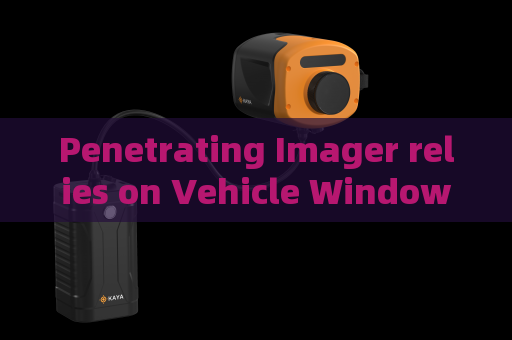
The Penetration Imager directly addresses this scenario by leveraging laser range-gated imaging technology to see through automotive glass at extended distances. Unlike conventional optical devices that are blinded by glare, tinting, or reflections, the Penetration Imager emits a high-repetition pulsed laser that synchronizes with an intensified gated camera. By precisely timing the shutter to open only when light reflected from the target returns—while ignoring backscatter from the glass surface and atmospheric particles—the system produces a high-contrast, clear image of the vehicle interior. This function allows an operator to remain at a secure distance, typically 100 to 300 meters, and still observe seat positions, hand movements, and potential weapons through the windshield or side windows. The system’s built-in MCP image intensifier and high-voltage timing module enable operation even in low-light or glaring conditions, ensuring that the critical need for distance does not come at the cost of image quality.
In practical field deployment, the Penetration Imager is mounted on a tripod or vehicle platform and operated from a concealed position behind cover. The operator uses a handheld display or tablet to view the real-time gated imagery. For a typical traffic stop scenario, the unit is set up at a pre-determined standoff point—for example, 80 meters behind a concrete barrier—allowing the officer to assess whether the suspect is alone, whether any hostages are present, and whether the subject’s hands are visible. This eliminates the need for a tactical approach to the vehicle for visual confirmation. The system’s ability to penetrate multiple layers of automotive glass, including laminated windshields and tempered side windows, ensures that even vehicles with heavy after-market tinting can be inspected. Because the imaging is passive in terms of detection—the laser is invisible to the naked eye and does not emit a visible beam—the suspect remains unaware of the surveillance, preserving tactical surprise while maintaining operator safety.
A further operational detail involves the system’s effectiveness under adverse environmental conditions that often accompany crisis events. Rain, fog, and smoke from nearby fires degrade traditional optics, but the Penetration Imager’s gated timing filters out the backscatter from these particles, sustaining clarity through the vehicle glass. However, it must be noted that the instrument cannot penetrate dense smoke inside the cabin or non-transparent barriers; its utility is strictly limited to optical media such as glass. This specificity is deliberate: by confining the imaging to the optical domain, the Penetration Imager avoids the false positives and regulatory constraints associated with non-optical systems. For the operator, the combination of secure standoff distance, reliable glass penetration, and resistance to weather-induced degradation means that the decision to engage or negotiate can be made with confidence—without sacrificing the fundamental requirement of staying safe.