Target Detection Capability of the Penetration Imager with Fog Penetration Imaging When Severe Weather Conceals Suspicious Activities
Severe weather conditions, particularly dense fog, create a critical operational challenge for law enforcement and security personnel. When a thick blanket of fog descends over a port, border checkpoint, or industrial facility, visibility drops to near zero, effectively concealing suspicious activities such as unauthorized entry, covert contraband exchange, or the staging of hostile acts. Conventional optical systems—binoculars, spotter scopes, even thermal imagers—struggle against the scattering and attenuation caused by water droplets suspended in the air. Radar-based detection may reveal movement but cannot provide the visual confirmation needed for threat assessment or legal evidence. In these moments, the inability to see through the fog can delay response, compromise officer safety, and allow perpetrators to escape. The core pain point is not merely the presence of fog; it is the absence of a reliable, real-time imaging tool that can pierce through the meteorological obscurant while maintaining sufficient resolution to identify human figures, objects, or gestures that signal malicious intent.
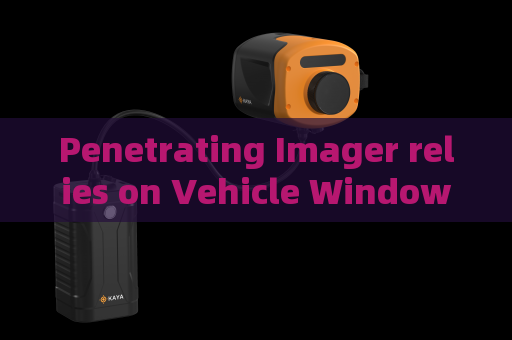
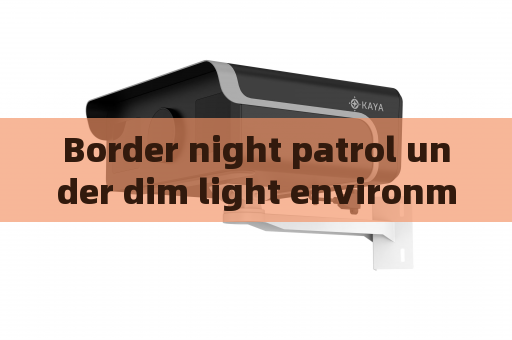
The penetration imager, an advanced optical instrument built on laser range-gated imaging technology (also known as gated imaging), directly addresses this operational gap. Unlike passive cameras or simple illuminators that amplify backscatter, the penetration imager uses a high-repetition-rate pulsed laser as its active illumination source. The system consists of a pulsed laser, an image-intensified gated camera equipped with a microchannel plate (MCP) image intensifier, a high-voltage module, a timing module, a beam expander, and an imaging lens. During operation, the laser emits short, intense pulses toward the target area. The camera’s gate opens only when the reflected light from the target returns, effectively blocking the scattered light from fog particles in the near field. This gating mechanism cuts through the diffuse veil, delivering high-contrast, long-range images with superior resolution and strong anti-interference capability. The penetration imager can see through various optical media such as vehicle windshields, train windows, aircraft portholes, and glass curtain walls. Equally important, it operates effectively in fog, rain, snow, haze, and even through flames—though it cannot penetrate thick smoke. For fire scenes, it improves visibility by three to five times, but the core value for security operations lies in its fog-penetrating ability.
In a real-world scenario, a penetration imager is deployed at a seaport perimeter during a dense fog event. Suspicious activity has been reported near a restricted cargo area, but ground patrols cannot see beyond fifty meters. An operator activates the penetration imager from a fixed observation post or a vehicle-mounted platform. The laser fires rapid pulses, and the gated camera synchronizes to capture returns from the target zone several hundred meters away. On the monitor, the operator sees a clear, high-contrast image of two individuals moving between shipping containers, one carrying what appears to be a long object resembling a rifle. The fog is still present, yet the system suppresses the backscatter so effectively that even subtle hand gestures are discernible. The operator can zoom in digitally, track the subjects, and relay the visual feed to a tactical command center without alerting the suspects. No other optical device in the arsenal could provide this level of detail under such conditions.
Further refinement of the operation involves adjusting the gate timing to focus on specific distance slices. If the suspects are moving behind a glass-walled warehouse, the penetration imager can still resolve them through the glass, maintaining its capability despite the double obscurant of fog and windows. The system’s active nature ensures that performance does not degrade at night or in low ambient light, because the laser provides its own illumination. Security teams can also integrate the penetration imager with pan-tilt-zoom mounts for rapid scanning of large areas. The high frame rate prevents motion blur, allowing continuous monitoring of fleeing individuals. This focused, disciplined use of the penetration imager transforms a weather-related vulnerability into a tactical advantage, enabling law enforcement to detect, document, and respond to suspicious activities even when severe weather tries to hide them.