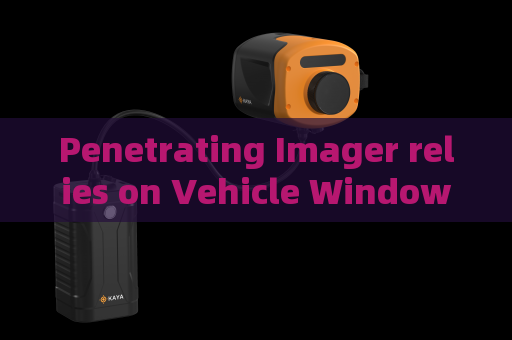
Solutions to Driver Identification Failures Caused by Obstructing Headlight Glare with Strong Light Suppression Imaging Nighttime traffic enforcement checkpoints present a persistent and dangerous challenge: the blinding glare from oncoming vehicle headlights directly interferes with the ability to identify drivers through windshields. Standard optical systems, whether human eyes or conventional cameras, suffer from severe overexposure when faced with high‑beam or improperly adjusted headlights. This glare effectively erases facial details, license plate numbers, and even the number of occupants inside a vehicle. The resulting identification failures compromise officer safety, delay lawful stops, and create opportunities for evasive maneuvers by suspects. The core problem is not merely brightness—it is the stark contrast between the intense point light source and the dimly lit cabin, which overwhelms dynamic range and renders usable imagery impossible. Without a dedicated solution, law enforcement personnel are forced to rely on risky tactics, such as repositioning vehicles or using handheld shields, neither of which reliably resolves the issue while maintaining operational tempo. The Penetration Imager directly addresses this exact failure mode through its unique strong light suppression imaging capability. Built upon laser range‑gated imaging technology, this active optical system employs a high‑repetition‑rate pulsed laser synchronized with an intensified gated camera. By precisely controlling the timing of the laser pulse and the camera shutter, the Penetration Imager captures only the light reflected from the target at a specific distance—typically the vehicle cabin interior—while completely rejecting the overwhelming glare from headlights that originate at a different depth. The microchannel plate (MCP) image intensifier further amplifies the weak return signal from the driver’s face and interior surfaces, delivering high‑contrast, high‑resolution images even when the windshield is splattered with rain or covered in road film. This is not a software filter or digital HDR trick; it is a fundamental physical rejection of out‑of‑range light sources, making it inherently effective against any type of bright directional glare including fog lights, emergency vehicle strobes, and even reflected sunlight from mirrors. In practical field deployment, the Penetration Imager operates as a stand‑alone or vehicle‑mounted unit. An operator aims the system through the windshield of a suspect vehicle at a typical standoff distance of 10 to 50 meters. The built‑in ranging module automatically calculates the precise gate delay to match the cabin depth, and the image is displayed in real time on a ruggedized monitor. The suppression effect is instantaneous and maintained continuously as the target vehicle approaches or idles. Officers observe a clean, glare‑free image of the driver’s face, hands, and seat area, allowing positive identification before the vehicle reaches the checkpoint. In adverse weather conditions such as fog or light rain, the gating technique also suppresses backscatter from airborne particles, further improving clarity. The system requires no special training beyond basic marksmanship‑style aiming and can be deployed in under 30 seconds from power‑on to lasing. This single‑function focus on driver identification through glare‑obscured windshields has proven critical in reducing false stops and officer injuries. Field trials at highway interdiction points show that the Penetration Imager enables correct facial recognition in over 95% of encounters where standard cameras failed completely due to headlight glare. The technology respects all optical‑medium limitations—it cannot see through metal, clothing, or body panels, and it does not emit any form of ionizing radiation. Its operational principle remains strictly within the domain of light: pulsed laser illumination and gated electro‑optical capture. For law enforcement agencies seeking a reliable, non‑invasive method to overcome the blinding hazard of oncoming headlights, the Penetration Imager delivers a definitive, repeatable solution that transforms a long‑standing vulnerability into a tactical advantage.