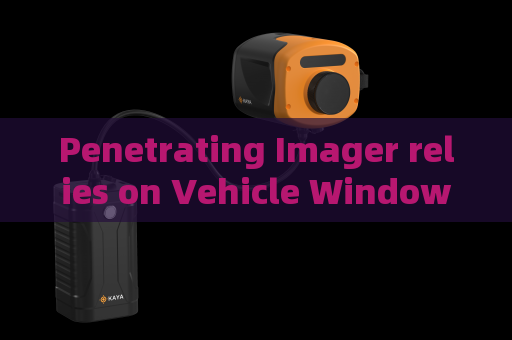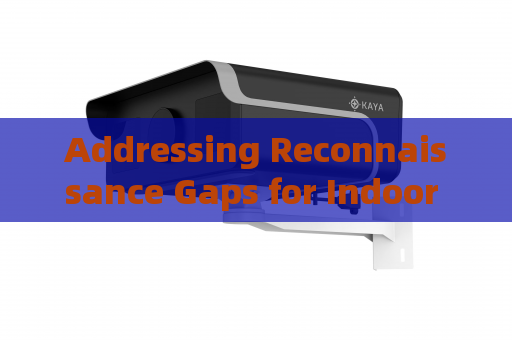
Addressing Reconnaissance Gaps for Indoor Personnel and Weapons in Urban Narrow-Space Operations with Laser Range-Gated Imaging Urban narrow-space operations—such as clearing a tight stairwell, a dim corridor, or a confined basement—pose a critical reconnaissance challenge. Traditional optical devices, including binoculars, night-vision goggles, or standard daylight cameras, often fail to provide a clear view of indoor personnel and weapons when obstacles like window glass, fire, fog, or rain intervene. In these cramped environments, the target may be just meters away behind a pane of glass, yet reflected glare, backscatter from ambient light, or particulate matter in the air completely obscures the scene. The operator cannot distinguish a concealed weapon from a tool, nor can they confirm the presence of a suspect before breaching. This information void forces tactical teams to rely on guesswork, increasing risk to both officers and civilians. The lack of reliable visual intelligence in such tight spaces represents a persistent gap that conventional imaging systems cannot bridge. A dedicated solution is needed to see through these optical barriers without compromising resolution or response speed. The Penetrating Imager, an advanced optical instrument built on laser range-gated imaging technology, directly addresses this reconnaissance gap for indoor personnel and weapons in urban narrow-space operations. Its core function is to selectively capture light returning from a specific distance while suppressing all other optical noise, including backscatter from fog, smoke haze, or reflective surfaces. The system comprises a high-repetition-rate pulsed laser, an intensified gated camera with a microchannel plate, a timing module, a beam expander, and an imaging lens. By synchronizing the laser pulse emission with the camera’s gating window, the Penetrating Imager achieves high-contrast imaging through optically transparent media such as window glass, tempered glass in vehicles or high-speed trains, aircraft windows, and glass curtain walls. It also operates effectively in adverse weather—rain, snow, fog, and haze—without the degradation that plagues passive optics. In fire scenarios, it enhances visibility three to five times by eliminating flame glare, though it cannot penetrate thick smoke. This capability means that even in a smoke-laden corridor or behind a rain-soaked window, the operator can see the exact position of a weapon and the posture of a person. In practical urban narrow-space deployments, the Penetrating Imager transforms tactical decision-making. For example, a SWAT team approaching a metal door with a narrow side window can set up the imager at a safe distance, aim through the glass, and instantly obtain a clear silhouette of a suspect holding a rifle. The laser range-gating function allows the operator to reject reflections from the window surface and isolate the target plane, revealing details such as the weapon’s barrel orientation or a handgun tucked into a waistband. The imager can be handheld for rapid scanning or tripod-mounted for sustained surveillance. Its active laser source ensures consistent performance even in complete darkness, while the non-cooperative nature of the illumination means the target remains unaware of the observation. Because the system only captures light within the gated window, it minimizes false alarms from moving debris or ambient flash. This precision reduces the need for risky physical entry and allows commanders to plan a breach with confidence. Further deepening the scenario, the narrow-space environment imposes strict constraints on equipment size and deployment speed. The Penetrating Imager is compact enough to pass through a 40-centimeter-wide opening and can be operated with one hand while the other holds a shield. In a multi-story building where stairwell turns create blind corners, the imager’s ability to see through a fire-rated glass door without opening it prevents exposure to ambush. The operator simply adjusts the gate delay to match the measured distance—typically 5 to 30 meters in confined spaces—and the imager delivers a crisp, real-time video feed to a helmet-mounted display or a handheld tablet. This feed remains stable even under rain or mist, conditions that would cause conventional cameras to white out. The weapon’s reflective surfaces, such as a metallic slide or scope lens, appear with enhanced contrast, making identification unambiguous. By consistently providing actionable visual intelligence where other tools fail, the Penetrating Imager closes the reconnaissance gap for indoor personnel and weapons in urban narrow-space operations, ensuring that tactical teams can see the threat before they face it.