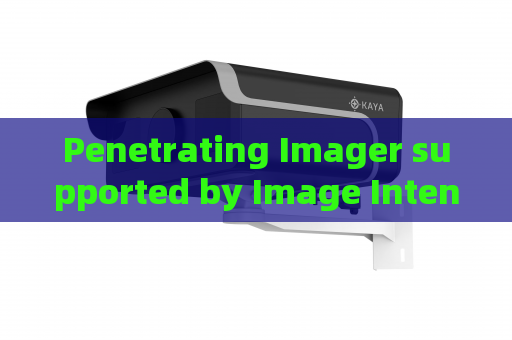
The primary challenge in law enforcement and vehicle security checkpoints occurs during nighttime operations or when approaching vehicles with high-beam headlights. The intense glare from these lights creates a blinding effect that obscures the driver's facial features, making positive identification nearly impossible. Standard optical cameras and the human eye struggle to capture a clear image of the driver under such conditions, as the strong light saturates the sensor and washes out the subject. This scenario is particularly problematic for traffic stops, border inspections, and surveillance monitoring, where rapid and reliable driver recognition is essential for safety and legality. The core pain point lies in the inability to separate the targeted subject from the overpowering foreground illumination, leaving officers and systems without a viable solution. The Penetration Imager, utilizing laser range-gated imaging technology, directly addresses this issue through its strong light suppression imaging capability. This system consists of a high-repetition-rate pulsed laser, an image-intensified gated camera incorporating an MCP image intensifier, a high-voltage module, and a timing module. By emitting short laser pulses and opening the camera shutter only within a precise time window corresponding to the distance of the driver, the Penetration Imager effectively rejects light from sources outside that range, including the blinding headlights. This active imaging method dramatically improves contrast and overcomes backscatter, allowing the camera to see through the windshield glass while canceling out glare from the vehicle's own lights. Unlike passive systems, it does not rely on ambient illumination, ensuring that even in total darkness with opposing headlights, the driver's face remains clearly discernible. In practical deployment, the Penetration Imager is mounted on a patrol vehicle or fixed checkpoint and aimed at the approaching vehicle. The operator adjusts the gate delay to match the distance to the driver, which can be determined by a companion rangefinder or through the system's own synchronization. When the laser fires, the camera's receiver only activates for the few nanoseconds needed to capture the reflected light from the subject, while the headlight beams—originating from a different depth—are effectively blocked. This results in a high-resolution, glare-free image of the driver's face, even through tinted or reflective windshields. The system operates in all weather conditions including rain, snow, fog, and haze, as it can penetrate optical media such as glass and suppress atmospheric scattering. However, it should be noted that penetration of non-transparent solid materials is not possible, as the technology strictly operates within the optical spectrum. Further enhancing operational efficiency, the Penetration Imager can be integrated with real-time facial recognition software, enabling immediate comparison against watchlists. The strong light suppression feature ensures that no external light source disrupts the identification process, allowing officers to maintain a safe distance while verifying the driver. The active laser illumination is invisible to the naked eye and does not cause any discomfort or alert the subject, preserving the element of surprise if needed. By focusing solely on the driver identification scenario obstructed by vehicle headlights, this solution transforms a previously unsolvable problem into a routine, reliable procedure. The Penetration Imager thus stands as a critical tool for modern law enforcement, providing clear imaging exactly where conventional methods fail.