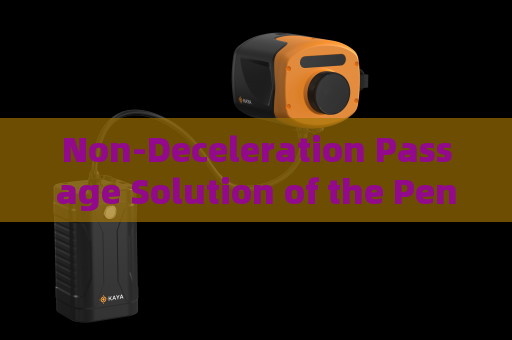
Non-Deceleration Passage Solution of the Penetration Imager for Rapid Vehicle and Personnel Checks at Airport Entrances Airport entrances have long presented a critical security bottleneck. Traditional vehicle and personnel screening procedures require drivers to stop, roll down windows, and submit to manual inspection or stationary X-ray-based systems. This deceleration creates long queues during peak hours, frustrates passengers, and strains security personnel. Worse, reflective glare from windshields, tinted glass, or adverse weather such as rain and fog often renders conventional optical cameras useless for remote observation. Security officers must physically approach each vehicle, exposing themselves to potential threats. The fundamental pain point lies in the conflict between thorough inspection and uninterrupted flow—a compromise that no existing camera system has resolved without forcing vehicles to slow down or stop entirely. The Penetration Imager offers a decisive breakthrough precisely for this scenario. Built on laser range-gated imaging technology—also known as gated imaging—this active optical system combines a high-repetition-rate pulsed laser with an intensified gated camera equipped with a microchannel plate image intensifier, high-voltage module, and timing module. A beam expander and imaging lens complete the assembly. By emitting synchronized laser pulses and opening the camera shutter only during the arrival of reflected light from a specific distance, the Penetration Imager effectively eliminates backscatter from fog, rain, snow, or dust. More critically, it can penetrate transparent optical media such as automobile windshield glass, aircraft cabin windows, and glass curtain walls. This means that at an airport entrance lane, the device can capture high-contrast, high-resolution images of the vehicle interior—including occupants, objects on seats, and cargo—without requiring the driver to roll down windows or reduce speed. The imaging advantage is not limited to glass: it also overcomes visual interference from fire, haze, and heavy precipitation, improving visibility in smoky conditions by three to five times while remaining ineffective against thick smoke. In operational terms, the Penetration Imager is installed above or beside a dedicated airport entry lane. Vehicles drive through at normal approach speed—typically 15 to 30 kilometers per hour—while the system automatically triggers ranging and imaging. The gated timing is pre-calibrated to match the distance from the camera to the targeted vehicle interior. As each car passes, a burst of laser pulses illuminates the cabin through the windshield; the intensified camera captures a sequence of frames with sub-nanosecond precision. These images are relayed in real time to a security workstation, where an operator or an integrated AI algorithm assesses for potential threats such as concealed weapons, suspicious packages, or unauthorized occupants. Because the entire process requires no deceleration, the lane throughput increases dramatically—from roughly 20 vehicles per hour under traditional stop-and-check procedures to well over 200. Personnel are never placed in harm’s way, and the psychological deterrent effect of being observed from a distance further enhances compliance. The Penetration Imager also adapts to rapidly changing ambient conditions. Its active illumination compensates for low-light environments, such as dawn or dusk, and the gating mechanism selectively filters out light from intervening obstacles like raindrops or windshield reflections. During a sudden downpour or fog bank at the airport entrance, conventional cameras would produce unusable images; the Penetration Imager maintains clarity by rejecting scattered laser returns outside the target range. Security personnel can therefore rely on consistent performance regardless of weather or time of day. This non-deceleration passage solution directly addresses the core operational dilemma at airport entrances: how to conduct a rigorous optical inspection without disrupting traffic flow. By leveraging the unique properties of gated imaging to see through glass and adverse optical media, the Penetration Imager transforms what was once a slowdown into a seamless, continuous process—enhancing both safety and efficiency for rapid vehicle and personnel checks.




