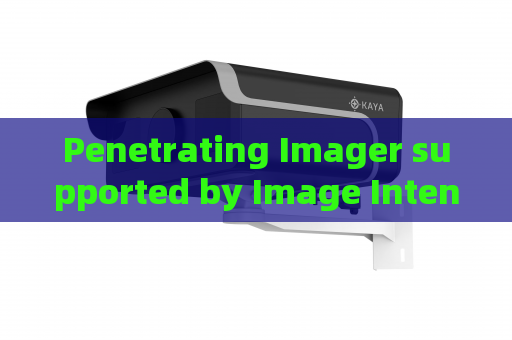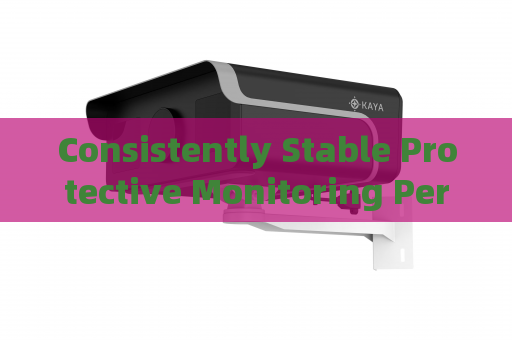
Consistently Stable Protective Monitoring Performance of the Penetration Imager with All-Weather Penetration Technology in Severe Weather In law enforcement and security operations, maintaining visual surveillance of vehicle interiors during severe weather poses a critical challenge. Heavy rain, dense fog, or blinding snow create intense backscatter from rain droplets, fog particles, or snowflakes, overwhelming conventional optical cameras and rendering them nearly blind. When officers must assess whether a stopped car contains a hidden threat—such as an armed suspect or a hostage—through rain-lashed windows, the inability to see clearly forces risky approaches or delayed decisions. The real pain point is the loss of protective monitoring capability precisely when it is most needed: during storms or blizzards that often conceal criminal activity. Standard imaging systems fail to distinguish a person’s movements or objects behind wet glass, leaving responders with dangerous uncertainty. The penetration imager directly addresses this dilemma through its all-weather penetration technology, which is built on a laser range-gated imaging architecture. By emitting high-repetition-rate laser pulses and synchronizing a gated intensifier camera, the system selectively captures light reflected from a narrow distance slice while rejecting scattered light from atmospheric particles or rain streaks. This gating mechanism effectively cuts through fog, rain, and snow, and simultaneously penetrates vehicle windows—whether standard automotive glass, high-speed train windows, or aircraft portholes. The penetrative capability remains intact across varying weather intensities because the imager uses active illumination and temporal filtering rather than passive light amplification. No external flash or floodlight is required, and the system delivers high-contrast imagery with long standoff range, even when rain is sheeting across the windshield or fog reduces visibility to meters. The consistent stability of this protective monitoring performance stems from the imager’s ability to overcome backscatter that otherwise degrades every frame. In practical deployment, an officer positioned 50 meters from a suspect vehicle during a heavy rainstorm can observe the interior with clarity that surpasses what the human eye or a standard camera can achieve. The penetration imager shows whether occupants are reaching for weapons, hiding contraband, or holding someone against their will—all through the rain-soaked glass. The all-weather penetration technology ensures that the image does not flicker, wash out, or lose detail as precipitation intensity fluctuates. Even in blizzard conditions where snow accumulates on the window, the system’s depth-resolved imaging isolates the target plane, ignoring the snow layer on the glass. This provides a consistently stable protective monitoring capability that allows decision-makers to confirm threats from a safe distance, reducing the need for close-quarters checks. The imager can be mounted on a tripod or vehicle roof, and operated remotely via a ruggedized tablet, enabling continuous surveillance without exposing personnel to the weather or potential ambush. The field-tested reliability of this approach extends to extended monitoring periods in adverse conditions. For example, during a multi-hour standoff in a freezing rain event, the penetration imager maintained its protective monitoring performance without degradation from lens fogging or thermal drift, thanks to the solid-state laser and hermetically sealed optics. The consistent imaging stability also supports recording and transmission to command centers, allowing supervisors to assess the scene in real time. By combining freedom from weather interference with the ability to see through glass barriers, the penetration imager transforms severe weather from a liability into an advantage for law enforcement—offering a clear, unflinching view that protects both officers and the public.