In VIP security operations, the threat posed by surrounding suspicious vehicles is among the most challenging to neutralize. These vehicles may carry explosives, surveillance equipment, or armed personnel, yet they often blend seamlessly into everyday traffic. Traditional optical surveillance methods—binoculars, telescopic lenses, or standard CCTV—are easily defeated by tinted windows, reflective coatings, or simply the angle of sunlight. An operative trying to observe the occupants of a suspect car through its windshield must contend with blinding glare, backscatter from dust or moisture, and the risk of being spotted themselves. The moment a pair of binoculars is raised or a camera lens is pointed directly, the element of surprise vanishes. Worse, many VIP protection teams operate under strict rules of engagement that forbid any visible overt surveillance of innocuous-looking vehicles. The core pain point is this: how to see clearly through multiple layers of automotive glass without revealing the observation point, all while overcoming optical interference from the vehicle’s own structure and the surrounding environment. A solution must be passive in appearance yet active in capability, offering true covert detection without compromise.
The penetrating imager directly addresses this dilemma through its laser range‑gated imaging technology, a form of gated imaging that selectively captures light reflected from a specific distance. Unlike conventional cameras that flood the sensor with all ambient light, the penetrating imager fires a high‑repetition‑rate pulsed laser and synchronizes its intensified gated camera—built around an MCP image intensifier, high‑voltage module, and timing circuitry—to open only when the laser pulse returns from the target window. This temporal gating effectively eliminates backscatter from rain, fog, haze, or the glass itself, and delivers high‑contrast images of the interior of a suspicious vehicle through the windshield or side windows. Because the illumination is pulsed and lasts mere nanoseconds, the laser beam is invisible to the naked eye and undetectable by standard night‑vision devices. The penetrating imager thus enables an operator to sit in a stationary observation van or a moving escort vehicle, point the system at a target car from hundreds of meters away, and see every occupant, every object on the seats, and every movement—all without the driver ever knowing they are under surveillance. The technology is purely optical; it uses no X‑rays, no radio waves, and cannot penetrate metal or concrete, but it is precisely optimized for the glass‑dominant environment of the road.
In practical deployment, the penetrating imager is often mounted inside a VIP escort vehicle or a discrete fixed post, such as a building window or a disguised minivan. The operator selects the target vehicle based on behavioural indicators—erratic lane changes, repeated circling, or unexpected parking near the VIP motorcade route. With the press of a single button, the system locks onto the range of the suspect car’s windscreen and begins capturing clear, real‑time imagery. The high‑repetition‑rate laser and gated camera work together to produce video‑rate frames that are displayed on a ruggedized tablet inside the covert vehicle. Even in heavy rain or thick fog, the penetrating imager maintains its ability to see through the glass, boosting visibility three to five times over normal optics. The operator can instantly assess whether the target car contains weapons, suspicious packages, or individuals wearing tactical gear, and relay that intelligence to the security command without any external radio signature or visible movement. Because the laser is eyesafe and the system is passive in appearance, the detector remains completely hidden from the suspect.
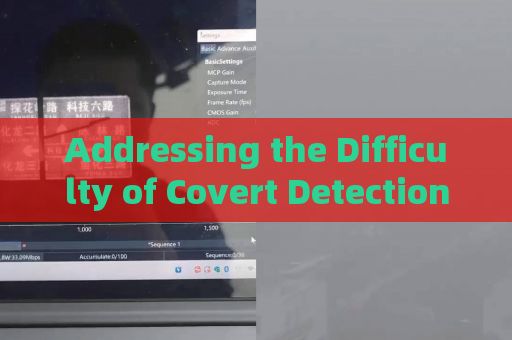
A further operational detail involves the handling of multiple threat layers. When a VIP motorcade passes through an urban environment, there may be dozens of vehicles within a 200‑meter radius. The penetrating imager’s distance‑gating function allows the operator to rapidly switch focus between front‑seat occupants of one car and rear‑seat occupants of another by simply adjusting the gate delay. This agility is critical when threats can shift from a sedan tailing the convoy to a van parked on a cross street. The system’s resistance to electromagnetic interference also ensures reliable performance near high‑voltage power lines or radio towers, which often accompany secure VIP routes. By providing clear, covert imagery through the very medium—automotive glass—that would otherwise shield hostile actors, the penetrating imager transforms a traditional blind spot into a tactical advantage. Every VIP security team that integrates this tool gains the ability to pre‑empt an ambush before the driver of a suspicious vehicle ever knows their intentions have been read.




