In tactical surveillance scenarios, law enforcement personnel often face the challenge of detecting threats inside vehicles or behind windows under complete darkness. Traditional night vision devices rely on ambient light or active infrared illuminators, but both reveal the operator’s presence—ambient light is absent in total darkness, while IR illumination emits a faint glow detectable by modern sensors. Worse still, standard optical systems cannot see through automotive glass due to reflections and glare from the vehicle’s interior or external light sources. This leaves officers at a critical disadvantage: they must either expose themselves to approach the window or rely on risky assumptions about the scene inside. The ability to observe a target through glass without emitting any visible or infrared light—truly zero-light imaging—remains a pressing operational gap. A penetration imager that works in absolute darkness while maintaining concealment is the missing tool for safe, covert assessments.
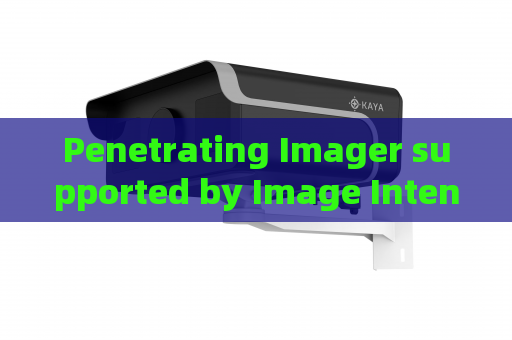
The penetrating imager solves this problem through laser range-gated imaging technology, an active optical method that delivers high-contrast imagery without betraying the operator’s position. Specifically, the system integrates a high-repetition-rate pulsed laser (operating in the near-infrared spectrum, invisible to the naked eye) with an intensified gated camera featuring an MCP image intensifier, a high-voltage module, and precise timing control. By emitting ultra-short laser pulses and synchronizing the camera’s shutter to open only when the reflected signal returns from the target distance, the penetrating imager effectively eliminates backscatter from fog, rain, snow, or—most critically—the glass surface itself. This time-gating mechanism ensures that only the light reflected from objects behind the glass is captured, while reflections off the glass and other optical media are rejected. The result is a clear, high-resolution image of the target area, achieved in total darkness without any detectable light emission because the pulsed laser is both eye-safe and invisible to conventional night vision devices.
In practice, an operator can deploy the penetrating imager from a concealed position dozens of meters away, aiming it through a vehicle’s side window or windshield. No preparatory lighting or physical approach is needed. The device automatically adjusts the gate delay based on the estimated distance, allowing the user to focus on the interior compartment. For example, during a high-risk vehicle stop in rural darkness, an officer can observe the driver’s hand movements, the presence of weapons, or the number of occupants—all while remaining invisible behind cover. The system’s built-in pulse laser emits at an eye-safe wavelength, and the camera’s gain is optimized to produce a real-time video feed on a handheld display. Importantly, because the laser light is not visible, the target inside the vehicle has no awareness of being observed. This zero-light imaging capability transforms the tactical equation: suspects cannot detect the surveillance, and the operator gains a decisive information advantage before any confrontation.
The same technology excels in adverse weather conditions that would cripple conventional optics. Rain, fog, or dust particles scatter visible and IR light, but the penetrating imager’s gated detection window rejects nearly all backscatter from particles between the lens and the target. In a maritime security scenario, for instance, an operator on a patrol boat can watch through a ferry’s cabin window during heavy rain at midnight, clearly identifying individuals and objects inside. The laser’s high repetition rate allows a continuous imaging stream, while the intensified camera maintains sensitivity even in zero ambient light. The penetrating imager increases visibility through fire smoke by three to five times (though dense smoke remains opaque), but for transparent optical media like glass, acrylic, and aircraft windows, the performance is uncompromised. By combining total darkness imaging with a concealed active emission—emission that is physically undetectable to the human eye and common night vision goggles—the device effectively delivers target detection without any light emission that the adversary can perceive. This makes it an indispensable tool for tactical reconnaissance, hostage negotiations, and counter-surveillance operations where silence and stealth are paramount.