Maritime surveillance in coastal waters and open seas faces a persistent threat from sea fog, a dense, low-lying aerosol layer that drastically reduces visibility to less than 50 meters in extreme cases. Conventional optical cameras, radar systems, and thermal imagers each have critical limitations under these conditions. Radar returns are often confused by sea clutter and wave noise, while thermal imagers suffer from uniform temperature signatures across fog and water, yielding no discernible contrast. The core pain point is that standard maritime monitoring—used for search and rescue, illegal fishing detection, and harbor security—becomes virtually blind during fog events. Delayed response times, missed threats, and misidentification of small vessels or floating debris are common. The operator faces a challenge: maintaining continuous, actionable visual intelligence when natural visibility is near zero. The need for a device that can actively see through the fog, not just detect heat or reflect radio waves, becomes urgent. The penetration imaging system, known as the fog penetration imager, offers a practical solution.
The fog penetration imager employs laser range-gated imaging technology, an active optical technique that synchronizes a high-repetition-rate pulsed laser with an intensified gated camera. This system emits short laser pulses toward the target area and opens the camera’s electronic shutter only when the reflected light from the desired distance arrives, effectively slicing through the fog layer. The key functional advantage lies in its ability to reject backscatter light from fog droplets. By gating out the scattered energy that would otherwise create a bright, featureless haze, the imager captures only the photons reflected from vessels, buoys, or coastline structures. This produces high-contrast, high-resolution images at useful distances even in dense sea fog. The system’s active nature—using its own controlled light source—means it is not dependent on ambient light or thermal contrast. It operates in complete darkness as well. For maritime monitoring, this translates to reliable, real-time visual data that traditional passive imagers simply cannot provide.
In actual maritime operations, the fog penetration imager is mounted on a stabilized platform aboard patrol vessels, coastal observation towers, or unmanned surface vehicles. The operator selects a target range—typically from 200 meters to several kilometers—and the imager automatically adjusts its gate delay. During a recent trial in the Bohai Sea area, a patrol boat detected a 6-meter fishing skiff drifting through heavy sea fog at a distance of 1.2 kilometers. The imager’s display showed crisp outlines of the hull and a person on deck, while the naked eye and a standard daylight camera saw only a white wall. The boat crew could confirm the target’s identity, heading, and speed, and vector a rescue vessel accordingly. This capability reduces false alarms and allows enforcement teams to maintain visual contact even when fog shrouds the entire horizon. The system’s robustness against moisture and salt spray, combined with its ability to operate around the clock, makes it a practical addition to any maritime security kit.
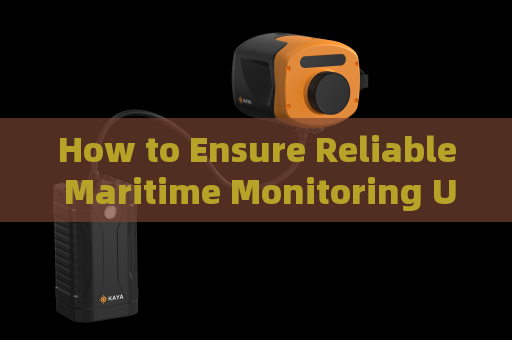
Deepening the application, the fog penetration imager also addresses the critical issue of target discrimination in multi-vessel environments. In a fog-bound shipping lane, distinguishing between a drifting cargo container and a stationary fishing net buoy is essential for collision avoidance. The high-resolution, range-gated imagery reveals structural details—such as the sharp edge of a container versus the irregular shape of a buoy—that thermal imagers miss due to uniform heat signatures. Additionally, the imager’s laser operates at a wavelength that is minimally absorbed by water vapor, ensuring consistent performance even in fog that contains drizzle or mist. The operator can zoom digitally without losing contrast, inspecting a small target at maximum range. This level of detail is impossible with radar alone. The fog penetration imager transforms maritime monitoring from a gap-filled, reactive process into a proactive, continuous visual surveillance capability, directly answering the question of how to ensure reliable monitoring under sea fog interference.




