Sea fog presents a persistent and dangerous challenge for maritime monitoring operations. Dense fog banks can reduce visibility to less than 50 meters within minutes, rendering standard optical surveillance cameras, thermal imagers, and even some radar systems ineffective. For coast guard patrols, port security teams, and search-and-rescue missions, this sudden loss of situational awareness creates critical gaps in vessel tracking, collision avoidance, and target identification. A ship’s deckhand may drift into a shipping lane unnoticed, a smuggler’s speedboat can vanish into the whiteout, or a drifting container becomes an invisible hazard. In these conditions, the reliance on conventional imaging tools leaves operators blind at the very moment they need clear, actionable intelligence. The core problem is not merely the presence of fog, but the inability of most optical systems to separate the target from the scattering light particles in the air, resulting in washed-out, low-contrast images that offer no practical value for decision-making.
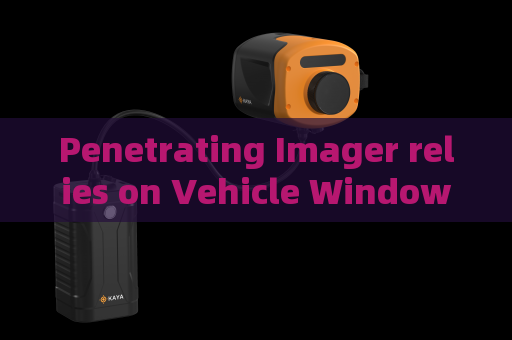
The fog penetration imager directly addresses this limitation through its unique laser range-gated imaging technology. Unlike passive cameras that rely on ambient light, the fog penetration imager is an active imaging system composed of a high-repetition-rate pulsed laser, an image-intensified gated camera with a microchannel plate (MCP) intensifier, high-voltage modules, and precise timing control. By emitting short-duration laser pulses and synchronizing the camera’s gating signal to receive only the light reflected from the target at a specific distance, the system effectively rejects the overwhelming backscatter caused by fog particles. This gating mechanism allows the imager to “slice through” the fog layer and produce high-contrast, high-resolution images of objects that would otherwise be completely obscured. The system’s ability to penetrate optical media such as mist, haze, rain, and snow makes it especially suited for maritime environments where atmospheric interference is constant. The fog penetration imager does not rely on any form of radiation or non-optical detection; it operates strictly within the visible and near-infrared light spectrum, using precisely timed laser illumination to overcome scattering.
In practical maritime monitoring applications, the fog penetration imager delivers real-time visual data that enables operators to maintain reliable surveillance even under thick sea fog. Mounted on a vessel’s bridge, a coastal tower, or an unmanned surface vehicle, the system can be configured to scan a designated sector or track a specific target. The operator simply selects the desired range window—typically from a few hundred meters to several kilometers—and the imager automatically adjusts the laser pulse timing and gate width to match. During a fog event, the display shows a sharp, clear image of buoys, other vessels, floating debris, or persons in the water, while the surrounding fog remains invisible in the captured frame. This capability is particularly valuable for harbor approach channels where fog often forces port closures; with the fog penetration imager, traffic can continue safely with real-time visual confirmation of vessel positions. For search-and-rescue scenarios, a helicopter crew can deploy the imager through a gimbal mount and identify a life raft or a swimmer from a safe altitude, even when the fog layer is thick enough to hide the surface completely.
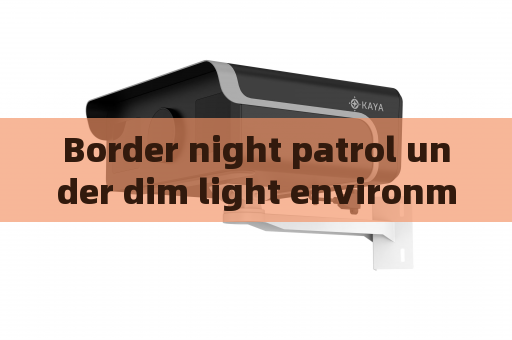
The integration of the fog penetration imager into existing maritime monitoring infrastructure requires minimal modification. The system outputs standard video feeds that can be displayed on any monitor or integrated into a vessel’s navigation system. For persistent surveillance over large areas, multiple imagers can be networked to cover blind spots. The device’s active illumination also works at night, providing the same penetrating capability in total darkness—a critical advantage for night-time interdiction operations. Because the fog penetration imager is resistant to glare from the sun or artificial lights, it maintains consistent performance under varying lighting conditions. Regular calibration of the timing module ensures that the range gate remains accurate, and the ruggedized housing protects the optics from salt spray and vibration. With proper deployment, the fog penetration imager transforms a hazardous fog encounter from a period of operational paralysis into one of sustained, reliable maritime monitoring.