In low-light imaging environmental conditions, conventional cameras and night-vision devices struggle to capture high-definition data, particularly when a transparent barrier such as a vehicle windshield or building glass stands between the operator and the subject. During nighttime law enforcement operations, officers often need to identify occupants inside a car or monitor suspicious activity through a glass storefront. Ambient illumination is insufficient, and the glass surface generates strong specular reflections and backscatter from ambient light sources—streetlights, headlights, or even the operator’s own flashlight. These artifacts wash out fine details, causing facial features, clothing patterns, and small objects to become indistinguishable. The result is compromised situational awareness, delayed decision-making, and increased risk for both officers and civilians. The core challenge is not merely seeing in darkness, but seeing through a semitransparent medium while maintaining enough contrast and resolution to collect actionable intelligence. This is where the penetrating imager becomes indispensable.
The penetrating imager, an advanced optical imaging instrument based on laser range-gated imaging technology, directly addresses these limitations. It consists of a high-repetition-rate pulsed laser, an intensified gated camera with a microchannel plate intensifier, a high-voltage module, a timing module, a beam expander, and an imaging lens. As an active imaging system, it emits short laser pulses toward the target and opens the camera’s electronic shutter only when the reflected light from the object of interest returns, precisely gating out the backscatter generated by the glass surface or atmospheric particles. This temporal discrimination effectively suppresses glare and haze, enabling the camera to capture a clean, high-contrast image even when the window is tinted, dirty, or wet. The penetrating imager delivers high resolution over long distances and strong resistance to environmental interference, making it ideal for high-definition data acquisition in scenarios where optical media—such as automotive glass, train windows, aircraft portholes, or glass curtain walls—are present.
In practical field use, law enforcement personnel deploy the penetrating imager from a patrol vehicle or handheld position at distances typically between 50 and 300 meters. The operator selects a target area, adjusts the laser range gate to match the distance to the subject behind the glass, and then observes the live feed on a high-resolution display. The system automatically compensates for varying low-light conditions, producing a clear video stream that reveals the occupant’s facial features, hand movements, and any objects held. Because the penetrating imager relies on active laser illumination, it does not depend on ambient light; therefore, even under complete darkness or through heavily tinted windows, the image quality remains stable. The data can be recorded for evidence, transmitted to a command center, or analyzed in real time for threat assessment. This capability significantly reduces the need for officers to approach the vehicle, lowering the risk of ambush while ensuring that high-definition data acquisition is achieved without compromise.
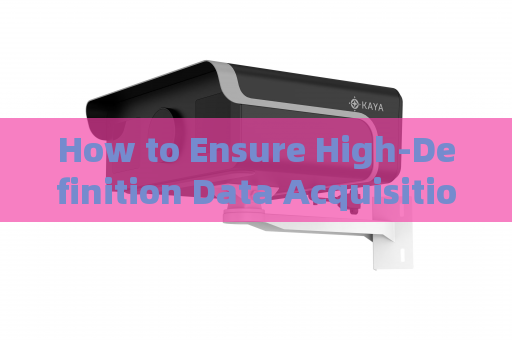
Under adverse weather such as fog, rain, or mist, the penetrating imager retains its advantage because the range-gating technique also attenuates the backscatter from water droplets and particulate matter. For instance, during a night traffic stop in heavy rain, the system still captures the driver’s face behind a rain-streaked windshield, where a standard camera would produce only a blurred silhouette. The penetrating imager increases visibility in fire scenes by a factor of three to five, though it cannot penetrate dense smoke—a limitation that operators must respect. Nonetheless, for the specific scenario of low-light imaging through glass barriers, the device provides a robust, repeatable solution for high-definition data acquisition, directly supporting officer safety and evidentiary standards in modern policing.




