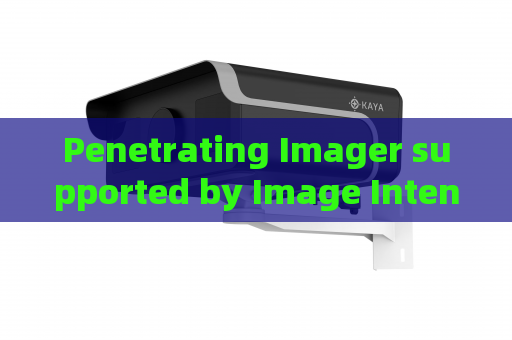
Customs checkpoints face a persistent operational challenge: inspecting vehicles and cargo rapidly without intrusive physical search, yet ensuring nothing hidden behind glass surfaces escapes detection. Traditional optical methods—binoculars, handheld cameras, or even the naked eye—are frequently defeated by tinted windows, reflective coatings, or adverse weather. Rain, fog, and smeared glass scatter visible light, creating glare and obscuring the interior of vehicles. Officers must then resort to time-consuming manual inspection, opening doors and rummaging through compartments, which slows throughput and risks compromising security. The bottleneck is not a lack of vigilance but a physical limit: conventional optics cannot see through optical media under real-world conditions. This drag on efficiency frustrates both enforcement goals and the legitimate flow of commerce. The penetrative imager directly addresses this gap by offering an optical solution that cuts through glass and environmental interference without physical contact.
The penetrating imager employs laser range-gated imaging technology to overcome these limitations. Unlike passive cameras that rely on ambient light, this active imaging system fires high-repetition-rate laser pulses toward the target while a gated intensified camera opens only for the return signal, effectively slicing through scattered light from fog, rain, or dirty glass. The combination of a microchannel plate intensifier and precise timing modules enables the system to suppress backscatter and capture high-contrast images of objects behind windows, even when those windows are heavily tinted or wet. For customs officers, this means the penetrating imager can resolve the interior of a vehicle through the windshield or side windows from a standoff distance, revealing hidden compartments, contraband, or suspicious movements in real time. The resolution remains sharp because the system rejects out-of-time noise, a critical advantage over conventional optics that blur under these conditions.
In practice, the penetrating imager integrates seamlessly into existing checkpoint workflows. An officer positions the device on a tripod or vehicle mount at a designated inspection lane, aiming it at approaching cars or trucks while maintaining safe distance. A single operator observes high-definition imagery on a ruggedized display, scanning for anomalies such as modified panels, concealed cargo behind seats, or individuals hiding in cargo areas. The system operates in all lighting conditions—daylight, twilight, or complete darkness—since it generates its own illumination. Rain and mist do not degrade image quality; the gate window adjusts automatically to combat atmospheric scatter. Customs sites in border crossings or seaport terminals have reported that a single penetrating imager can reduce average inspection time per vehicle from three minutes to under thirty seconds for visual checks, directly attacking the throughput bottleneck. Officers no longer need to circle the vehicle or request drivers to lower windows; the readout is immediate and non-intrusive, preserving both speed and respect for legitimate travelers.
Expanding on this single-scenario detail, the penetrating imager excels in environments where rapid clearance is paramount. Consider a high-volume checkpoint processing hundreds of vehicles per hour during peak seasons. Without such technology, each vehicle with tinted windows or rain-dampened surfaces triggers a manual intervention, creating a cascade of delays. The penetrating imager, however, renders the glass optically transparent to the operator, exposing the cabin and trunk area in crisp detail. The device’s inherent immunity to backscatter means it performs reliably even when the target vehicle’s windows are dirty or covered by a thin film of water—common conditions at roadside ports. Because the system is entirely optical and uses no penetrating rays beyond visible and near-infrared laser light, it poses no health risks to occupants or officers, staying within the strict boundaries of passive-like inspection. This precise capability—resolving the interior through optical media without touching the vehicle—effectively removes the single largest cause of inspection slowdown: the inability to see inside. Customs agencies adopting the penetrating imager find that the bottleneck shifts from image acquisition to data analysis, a much more manageable step that can be automated or performed by trained personnel without sacrificing security.