In tactical reconnaissance operations conducted under zero-light conditions, the absence of ambient illumination forces reliance on active illumination sources such as infrared illuminators or flashlights. However, these conventional systems introduce critical vulnerabilities: emitted light betrays the observer’s position to hostile forces equipped with night vision or spectral detection devices. The problem intensifies in high-glare tactical environments, where adversarial use of searchlights, vehicle headlamps, strobe weapons, or even direct sunlight reflections can overwhelm standard optical sensors. Traditional image intensifiers and digital cameras become saturated, producing washed-out frames with no usable detail. The operator faces a paradox—neither passive nor active imaging offers reliable performance when both absolute darkness and extreme brightness coexist in the same battlespace. This dual limitation, zero-light blindness compounded by glare-induced sensor failure, represents a persistent tactical gap that compromises mission safety and target identification accuracy. The penetration imager must address these competing constraints simultaneously to deliver actionable intelligence under such adversarial optical warfare conditions.
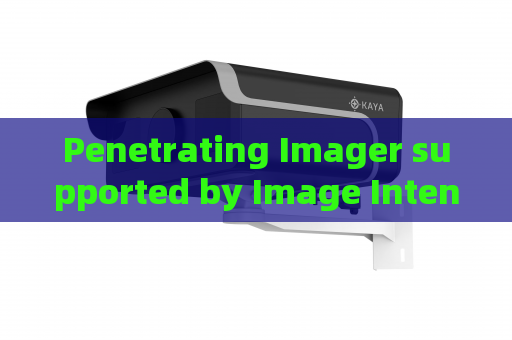
The penetration imager resolves zero-light and high-glare limits through laser range-gated imaging technology. Unlike conventional cameras that capture all light entering the lens at once, this system employs a high-repetition-rate pulsed laser to illuminate the scene, paired with an image-intensified gated camera. The camera’s MCP image intensifier, high-voltage module, and timing circuitry open the electronic shutter only when the laser pulse reflected from the target distance returns—closing it before or after any interfering light arrives. This temporal discrimination eliminates background glare from sources like floodlights or flash grenades, because those photons reach the sensor at different times than the laser returns. In zero-light environments, the laser provides the sole illumination, and the gating mechanism filters out backscatter from atmospheric particles, delivering crisp images even through dense fog, rain, or smoke. The system achieves high-contrast imaging with long-range capability, allowing operators to maintain covert observation without revealing their position, as the pulsed laser is invisible to standard night vision and difficult to detect without specialized equipment.
In practical use within a high-glare tactical setting, a penetration imager stationed at an overwatch position can observe a vehicle approaching under bright searchlights. The operator adjusts the gate delay to match the target distance, and the imaging system instantaneously suppresses the searchlight’s glare while rendering occupants behind the windshield in sharp detail. The same device performs effectively during a night raid where adversaries deploy strobe flash units to disorient hostile forces—the gate remains closed during the flash pulse, opening only when the laser returns from the scene, ensuring continuous, unimpeded observation. For counter-sniper operations, the penetration imager’s ability to see through vehicle glass or aircraft windows under any ambient light condition provides a decisive tactical advantage; the operator can identify weapon silhouettes or suspicious movements without exposing their own position to potential return fire. The system’s high resolution also enables facial recognition at distances exceeding conventional night vision, critical for positive identification before engagement.
Field operators configure the penetration imager by selecting the desired gate width and range offset through an integrated control interface, often pre-calibrated for common engagement distances. During dynamic scenarios, the automatic gain control within the image intensifier compensates for rapid brightness changes, such as when a vehicle passes from shadow into direct glare. The laser illuminator, mounted coaxially with the imaging optics, maintains beam coherence even at long ranges, and the expander lens adjusts the field of view without losing irradiance. Because the system only activates the laser during the brief gating window, power consumption remains low, extending battery life for extended missions. In zero-light conditions, the operator relies entirely on the pulsed laser, which operates in the near-infrared band invisible to the naked eye—preserving tactical stealth. The penetration imager, with its unique ability to decouple target reflectivity from overwhelming background light, stands as the definitive solution for reconnaissance personnel who must operate at the extreme intersection of no light and blinding light.