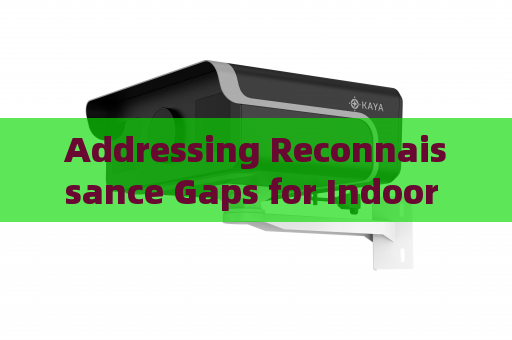
Addressing Reconnaissance Gaps for Indoor Personnel and Weapons in Urban Narrow-Space Operations with Laser Range-Gated Imaging Urban narrow-space operations present a distinct reconnaissance challenge when the objective is to identify indoor personnel and concealed weapons. Traditional optical devices, such as binoculars or standard night-vision scopes, are severely limited by environmental interference. In confined corridors, stairwells, or rooms behind windows, glare from ambient light, reflections off glass, and backscatter from dust or rain degrade image clarity. Smoke from nearby fires or fog further obscures visibility, while the need to maintain a standoff distance forces operators to peer through glass panes that reflect their own position. These conditions create dangerous blind spots where threats can remain undetected until it is too late. The penetration imager directly addresses these reconnaissance gaps by employing laser range-gated imaging technology to suppress optical clutter and deliver high-contrast views of interior spaces. The core function of the penetration imager that solves this problem is its ability to penetrate optical media such as window glass, vehicle windshields, and aircraft portholes while simultaneously overcoming atmospheric scatter. By synchronizing a high-repetition-rate pulsed laser with a gated intensified camera, the system selects only the light reflected from the target distance, effectively rejecting backscatter from fog, rain, snow, or smoke. This laser range-gated imaging capability allows operators to see through a dirty or rain-streaked pane and instantly acquire a clear, high-resolution image of personnel and weapons inside a room. Unlike thermal imagers that struggle with glass or reflective surfaces, the penetration imager maintains sharp detail even when the target is behind multiple layers of glazing or when the environment is filled with airborne particulates. In practice, the penetration imager transforms the way tactical teams conduct close-quarters reconnaissance. An operator positioned around a corner or behind cover can aim the device through a window or a narrow door gap, activate the pulsed laser, and receive real-time video of human silhouettes and weapon outlines inside the target space. The gating mechanism eliminates the blinding flare from direct sunlight or ambient urban lighting, and the high contrast enables identification of small arms, improvised devices, or hostages even in dim interiors. The system can be handheld or mounted on a small tripod for stability, with an optional remote display allowing the command element to observe the feed without exposing personnel. This operational method reduces the need to physically enter a dangerous area for a visual check, thereby lowering risk and preserving the element of surprise. Further refinement of the technique involves adjusting the gate timing to isolate specific depth planes, which is particularly useful in multi-room or multi-floor narrow spaces. For example, when scanning a hallway with multiple doors, the operator can set the range gate to focus on the room behind the nearest door, then adjust for the next room, effectively building a layered reconnaissance picture. The penetration imager’s resistance to fire and smoke interference—though not effective against thick, black smoke—means it remains functional in post-fire or post-explosion environments where visibility is reduced by mist or light smoke from burning materials. In all these scenarios, the device serves as a dedicated tool for closing the reconnaissance gap in urban narrow spaces, enabling faster and safer decisions regarding indoor personnel and weapon threats.




