The most persistent challenge in covert border surveillance and anti-smuggling operations is the need to observe suspects or illegal immigrants at extreme distances without betraying the presence of law enforcement. Traditional optical tools—binoculars, spotting scopes, or thermal cameras—often fall short. Binoculars and scopes rely on ambient light, which degrades rapidly in fog, rain, or darkness, forcing officers to move closer and risk detection. Thermal imagers can detect body heat but cannot see through glass, meaning a suspect sitting inside a vehicle or behind a window remains invisible. Even worse, any active illumination—flashlights, infrared illuminators, or laser designators—can be spotted by trained individuals using low-cost night vision gear. This dilemma is especially acute along vast border stretches where illegal immigrants cross in vehicles, hiding inside cars or trucks. Officers need a tool that captures crisp, actionable intelligence from hundreds of meters away, through glass, in poor weather, while remaining completely invisible to the target. The missing piece has been a non-intrusive, long-range optical system that overcomes atmospheric interference and glass reflections without giving away its own presence. That gap is now filled by the Penetration Imager.
The Penetration Imager solves this exact problem through its core technology: laser range-gated imaging, also known as gated imaging. Unlike passive optics or conventional cameras, this system fires a high-repetition-rate pulsed laser and synchronizes a gated, intensified camera to capture only the light reflected from a specific distance. By setting the gate delay, the operator can isolate the desired target plane and eliminate backscatter from fog, haze, rain, or even snow. More critically, the laser wavelength is outside the visible spectrum and the pulse duration is so short—nanoseconds—that the human eye cannot perceive it. This means a suspect or illegal immigrant sitting in a parked vehicle with tinted windows will never see a flash or beam, even from direct exposure. The Penetration Imager is specifically designed to penetrate optical media such as car windshields, train windows, aircraft portholes, and glass curtain walls. It can deliver high-contrast, high-resolution images through these surfaces from distances exceeding standard field binoculars, while fully suppressing the reflections that blind ordinary cameras. Additionally, in fireground or smoky haze scenarios—though not thick smoke—the device improves visibility by three to five times. But for the reconnaissance mission, the critical advantage is the ability to see through vehicle glass without the occupant knowing they are being watched.
In practice, this transforms how border patrol and special operations conduct remote surveillance along vehicle checkpoints or concealed observation posts. Consider a scenario where intelligence suggests that illegal immigrants are being smuggled inside a minivan traveling a remote dirt road. An officer positioned 400 meters away, behind natural cover, deploys the Penetration Imager. The device is tripod-mounted or handheld, with a zoom lens and an adjustable gate delay. The operator points it at the van and activates the laser. Instantly, the display shows a clear, detailed image of the interior through the tinted windshield: the silhouettes of two occupants in the front seats, and several more figures huddled in the rear cargo area. The license plate number is legible, and the facial features of the driver are sharp enough for later identification. No flash, no sound, no beam visible to anyone inside the vehicle. The operation remains completely covert. If the van stops, the officer can maintain continuous observation without repositioning. Even if fog rolls in or a light rain begins, the gating capability cuts through the atmospheric haze, preserving image quality. This allows decision-makers to confirm the presence of illegal immigrants before committing interception teams, avoiding false alarms and minimizing confrontation risks.
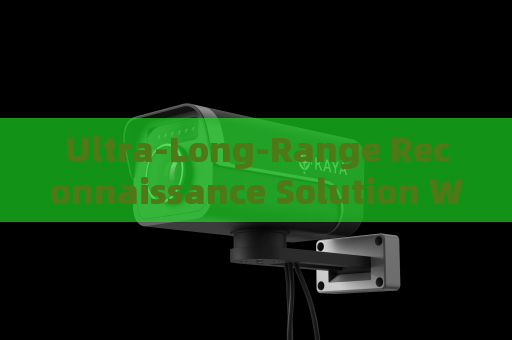
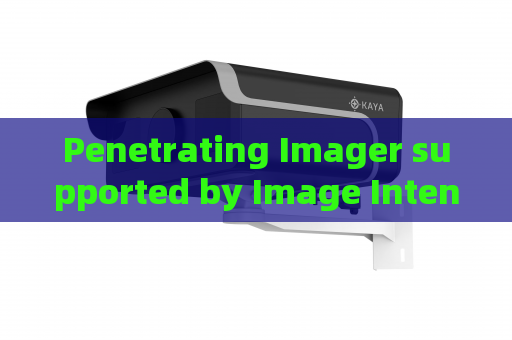
The operational simplicity of the Penetration Imager ensures it can be fielded by personnel with minimal training. The device integrates a high-repetition-rate pulse laser, an intensified camera with MCP and high-voltage modules, a beam expander, and an imaging lens—all housed in a rugged, weatherproof body. The operator adjusts range-gate distance using a simple dial, matching the target's approximate distance (often read from a laser rangefinder or GPS map). The built-in timing module automatically synchronizes the laser pulse and camera shutter to the selected range, rejecting all light from closer or farther objects. This means reflections from rain droplets, dust, or the vehicle's own glass surface are eliminated; only the light returned from the human occupants is captured. Because the system is active but covert, it can also operate at night or in complete darkness, unlike passive imagers. For ultra-long-range recon—beyond 800 meters—the beam expander tightens the laser divergence, maintaining illumination intensity. The result is a reliable, repeatable method for identifying threats without any behavioral change from the target. Whether monitoring a known smuggling route or establishing an observation post near a border crossing, the Penetration Imager provides the stealth and clarity that traditional optics simply cannot match. Its presence in the field quietly raises the effectiveness of counter-smuggling and anti-immigration operations, allowing law enforcement to see through barriers that once shielded illegal activity.