In border security and counter-smuggling operations, the ability to observe suspects or illegal immigrants from a safe distance without triggering their awareness is a critical requirement. Traditional optical surveillance tools—spotting scopes, telephoto lenses, or binoculars—often fail when the target is inside a vehicle or behind a glass window, because reflections, glare, and environmental backscatter obscure the interior. Thermal imagers can detect body heat but cannot reveal identity documents, concealed contraband, or the specific number of individuals through glass. Operators may be forced to move closer, increasing the risk of being noticed, and potentially compromising the entire mission. The core challenge lies in achieving high-resolution, covert observation across hundreds of meters while the suspect remains completely unaware of any surveillance. This gap demands a system that can see through optically transparent barriers without emitting detectable signals or requiring physical proximity.
The Penetration Imager—an advanced optical instrument based on laser range‑gated imaging technology—directly addresses this operational pain point. By emitting high‑repetition‑rate pulsed laser light through a beam expander and synchronizing an intensified gated camera (equipped with MCP image intensifier, high‑voltage module, and timing electronics), the system can selectively capture light reflected from a narrow range of distances. This effectively eliminates backscatter from fog, rain, dust, and the glass surface itself, producing a clean, high‑contrast image of the scene behind the window. Unlike passive optics, the Penetration Imager’s active illumination remains invisible to the naked eye because the laser wavelength and pulse duration are undetectable without specialized equipment. The suspect or illegal immigrant inside a vehicle, bus, or aircraft cabin perceives nothing—no flash, no sound, no obvious light source. The system’s ability to penetrate optical media such as automotive glass, high‑speed train windows, aircraft portholes, and glass curtain walls makes it a covert reconnaissance solution that operates entirely within the optical spectrum, without crossing into prohibited non‑optical domains.
In practice, a single operator can deploy the Penetration Imager from a fixed vantage point up to several hundred meters away, for example from a hillside overlooking a remote border crossing or a police vehicle parked discreetly at a checkpoint. The device is mounted on a stabilized tripod or a roof‑mounted gimbal, and the operator views the live image on a ruggedized tablet or eyepiece display. Even under challenging conditions—heavy rain, thick fog, or dense haze that would render ordinary binoculars useless—the system maintains clear identification of faces, markings on documents, hand‑to‑hand exchanges, or the outline of hidden compartments. The fire‑scene enhancement capability (improving visibility 3–5 times in smoke‑free flames) is not relevant here; instead, the critical advantage is the ability to see through multiple layers of glass while the target remains completely unaware. No radio waves, X‑rays, or ultrasonic pulses are involved, ensuring full compliance with operational safety standards and avoiding any possibility of detection by electronic counter‑surveillance equipment.
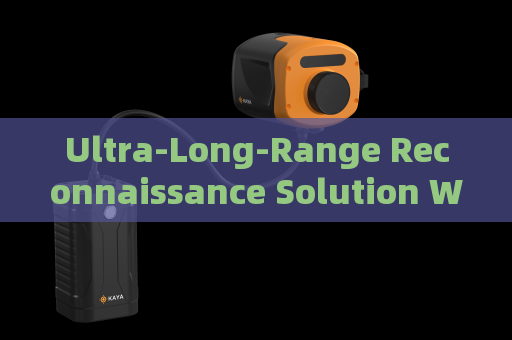
The operational tempo improves dramatically because the Penetration Imager eliminates the need for close‑approach reconnaissance. A border patrol team can observe a suspect vehicle from a distance of 300–500 meters, recording high‑resolution evidence of illegal immigration activity without ever entering the target’s field of view. The system’s range‑gated design allows the operator to isolate the exact depth of interest—for example, the interior of a minivan’s rear compartment—while ignoring reflections from the windshield or side windows. This precision reduces false positives and enables faster decision‑making: whether to intercept, follow, or wait for additional units. Because the Penetration Imager is a purely optical, active‑imaging system, its power requirements are modest, and it can run continuously for hours on a portable battery, making it suitable for extended surveillance missions. In summary, this ultra‑long‑range reconnaissance solution, leveraging the Penetration Imager’s unique through‑glass capability, fills a persistent operational void in law enforcement and border security, allowing covert observation of suspects and illegal immigrants with zero risk of alerting them.




