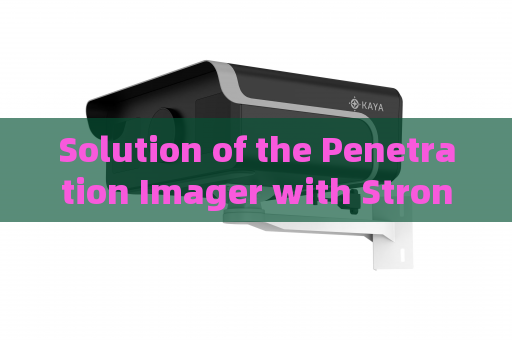
Solution of the Penetration Imager with Strong Light Suppression Imaging for Driver Identification Obstructed by Vehicle Headlights At night or in low-light conditions, law enforcement officers conducting traffic stops often face a critical challenge: identifying the driver of a vehicle whose headlights are glaring directly toward the observation point. The intense beam from high‑beam or improperly adjusted headlights creates a blinding veil that washes out facial features, making it nearly impossible to determine whether the person behind the wheel is the wanted suspect, a licensed operator, or an impaired individual. This obstruction not only compromises officer safety—since the driver’s identity remains unknown until they are physically approached—but also prolongs the stop, increasing risk for everyone involved. Traditional cameras and the naked eye fail to penetrate this wall of light; even with polarizing filters, the dynamic range of most imaging sensors cannot recover the details lost in the overexposed area. The core problem is that the vehicle headlights act as a controlled, high‑intensity source that actively masks the driver’s face, forcing officers to rely on verbal cues or wait for the driver to block the lights, which wastes precious seconds in a volatile encounter. The Penetration Imager, built upon laser range‑gated imaging technology, directly addresses this obstruction by employing a unique strong light suppression imaging function. This advanced optical system consists of a high‑repetition‑rate pulsed laser, an image‑intensified gated camera with a microchannel plate (MCP) intensifier, a high‑voltage module, and precise timing control. By synchronizing the laser pulse with the camera’s shutter, the imager only captures light reflected from a specific distance—exactly where the driver sits—while rejecting virtually all ambient and direct light sources that fall outside that range. In practical terms, the headlights’ intense beam, which would normally saturate a conventional sensor, arrives at the camera at a slightly different time than the laser‑illuminated signal from the driver’s face. The gating window excludes the headlight’s radiance, leaving only the high‑contrast, clear image of the individual behind the windshield. This technique does not rely on filtering or post‑processing; it physically eliminates the offending light at the sensor level, delivering a crisp, identifiable facial image even when the driver is directly facing the glare. During a field deployment, the Penetration Imager is typically mounted on a patrol vehicle or operated handheld from a safe distance. The operator aims the device at the target car, adjusts the range gate to match the distance to the driver’s seat, and initiates imaging. Within seconds, the onboard display shows a high‑resolution image of the driver’s face, unobscured by the headlight bloom. The system’s ability to maintain strong light suppression across various vehicle types—from sedans to SUVs—ensures that officers can confirm the driver’s identity without needing to approach closer than necessary. This operational workflow reduces the time spent in the “danger zone” outside the patrol car, allowing for more informed decisions, such as whether to call for backup or proceed with a standard traffic stop. The Penetration Imager’s active illumination also works effectively through the vehicle’s windshield glass, which is an optical medium that other non‑imaging sensors cannot penetrate. In practice, the strong light suppression capability becomes even more critical when multiple vehicles are involved, such as at a DUI checkpoint or during a pursuit termination. Headlights from the suspect’s car, from trailing patrol units, or from oncoming traffic can all contribute to a chaotic visual scene. The Penetration Imager’s range‑gated timing allows the operator to isolate the driver’s face regardless of the lighting sources’ directions. Moreover, because the device operates in the optical domain—using laser light and a gated camera—it completely avoids the constraints of thermal imaging, which can be confused by engine heat or warm headlights, and does not emit any radiation beyond class‑1 laser safety limits. The result is a field‑proven solution that transforms a blinding, dangerous situation into a straightforward identification task, enhancing both officer safety and operational efficiency during driver identification obstructed by vehicle headlights.




