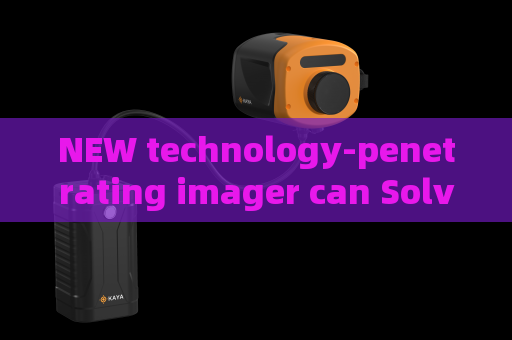
NEW technology-penetrating imager can Solve Evidence Collection Gaps for Law Enforcement Prior to Tactical Operations Law enforcement teams preparing for tactical operations often face a critical blind spot: the inability to see inside a suspect vehicle before making entry. A sedan parked on a dimly lit street may hold weapons, hostages, or explosive devices, but standard binoculars and body cameras are rendered useless by tinted windows, rain-streaked glass, or fog. Officers must rely on limited intelligence or risky close-range reconnaissance, leaving them vulnerable to ambush. The evidence needed to assess threat levels—the number of occupants, their positioning, visible objects on seats—remains hidden behind the very optical medium that separates law enforcement from the unknown. This collection gap forces tactical decisions based on guesswork, increasing danger for both officers and civilians. The penetrating imager directly addresses this gap through its laser range‑gated imaging technology. Unlike conventional cameras that flood the scene with light and capture overwhelming backscatter from glass or atmospheric particles, this active imaging system fires a high‑repetition‑rate pulsed laser and synchronizes a gated intensified camera to receive only the light reflected from a specific distance. By eliminating scatter from the glass surface and intervening fog, it produces a high‑contrast, high‑resolution image of the interior of a vehicle. The system’s ability to penetrate window glass—whether standard automotive, high‑speed train, or aircraft windows—allows operators to see through tints and coatings that defeat passive optics. Because the penetrating imager operates entirely within the optical spectrum, it captures the same visual detail the naked eye would see inside, without relying on thermal signatures or radio waves. In practice, the penetrating imager transforms pre‑tactical evidence collection. An officer can stand behind cover at a safe standoff distance—hundreds of meters away—and scan the target vehicle. The system’s zoom and focus adjustments let the operator isolate the driver’s seat, the rear passenger area, or the trunk. Real‑time video displayed on a ruggedized tablet shows contraband on the dashboard, a handgun tucked between seats, or the posture of a potential hostage. The high‑frame‑rate laser and gated camera work even through heavy rain, light snow, or haze, maintaining clarity where traditional optics fail. During nighttime operations, the active illumination provides its own light source, eliminating the need for flashlights that give away positions. This capability means tactical teams can download images and brief the entry unit before moving, turning a blind approach into a data‑informed operation. Beyond vehicle entry, the same penetrating imager supports perimeter observation through glass doors and windows in commercial or residential buildings, but the vehicle scenario remains the most common pre‑tactical challenge. The system’s resistance to harsh weather ensures that a suspected drug‑trafficking van can be assessed during a coastal storm, and its ability to cut through fire‑induced haze (with a three‑ to five‑fold visibility improvement) helps fire‑police joint operations at vehicle‑based arson scenes. Every evidence detail extracted before the breach reduces the cognitive load on the entry team, shortens decision cycles, and preserves lives. By closing the collection gap that has long plagued operations, the penetrating imager gives law enforcement the one thing they cannot afford to lack: certainty about what lies behind the glass.




