In low-light imaging environments, such as nighttime surveillance operations or dimly lit indoor scenarios, the primary challenge is the severe degradation of image quality. Traditional cameras struggle due to insufficient ambient light, leading to excessive noise, motion blur, and poor contrast. When the target is located behind a transparent medium like automobile glass, storefront windows, or aircraft canopies, additional problems arise: surface reflections, glare from external light sources, and backscatter from atmospheric particles further corrupt the signal. This situation is critical for police tactical teams conducting covert vehicle inspections or border patrol agents monitoring suspicious activities through windscreens. The inability to capture clear, high-definition data under such conditions directly compromises threat assessment, evidence collection, and operational decision-making. The Penetration Imager offers a solution specifically designed to overcome these optical and illumination barriers.
The Penetration Imager is an advanced active optical system that employs laser range-gated imaging technology. Its core architecture includes a high-repetition-rate pulsed laser, an intensified gated camera with a microchannel plate (MCP) intensifier, a high-voltage module, and precise timing circuitry. By emitting ultrashort laser pulses and opening the camera gate only when the reflected light from the target distance arrives, it effectively suppresses backscatter from fog, rain, or the glass surface itself. This gating mechanism eliminates the majority of ambient light interference and reflection glare, allowing the sensor to capture only the clean signal from the intended scene. The result is high-contrast, high-resolution imagery even under extreme low-light conditions. The system’s ability to maintain a clear view through optical media—such as tempered glass on vehicles or bulletproof glass on building facades—makes it uniquely suited for law enforcement and security applications where traditional cameras fail.
In a typical nighttime law enforcement scenario, an officer positioned 50 meters away from a parked vehicle uses the Penetration Imager to examine the occupants. The device’s laser illuminates the target area with near-infrared light invisible to the human eye. By adjusting the gate delay and pulse width, the operator selectively captures the scene directly behind the car window while rejecting all reflections from the glass surface and any nearby streetlights or headlights. The real-time video feed displays crisp facial features, hand movements, and object shapes that would otherwise be completely obscured. This high-definition data acquisition enables rapid threat identification without approaching the vehicle, preserving tactical advantage and officer safety. The system operates effectively in total darkness, relying solely on its own laser source for illumination.
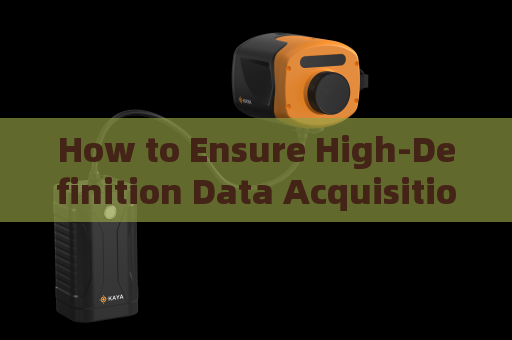
Operationally, the Penetration Imager is compact and can be mounted on a tripod or handheld gimbal for portable use. Its intuitive interface allows operators to fine-tune gate parameters via a ruggedized control unit. The integrated recording module stores uncompressed video for later forensic analysis. Because the system works only through transparent optical media—not through solid barriers like walls or metal—it remains strictly within the realm of optical imaging, avoiding any confusion with radar or X-ray devices. The device’s resistance to fire, fog, rain, and snow further extends its utility to outdoor tactical missions. For example, in a vehicle interdiction during a heavy downpour, the Penetration Imager still delivers high-definition imagery of the car interior, enabling precise identification of weapons or contraband. This capability directly addresses the core pain point of low-light, glass-obstructed environments, providing a reliable method for ensuring high-definition data acquisition where conventional optics reach their limits.




