In covert surveillance of suspicious residential properties, law enforcement faces a critical dilemma: obtaining actionable intelligence without compromising the operation. Traditional observation methods—binoculars, spotting scopes, or standard cameras—often require close proximity or direct line-of-sight through windows, risking detection by the target. Reflections from glass surfaces, inadvertent movements, or the need for artificial lighting at night can alert occupants, leading to evidence destruction, escape, or even ambush. The core challenge is the inability to see through glass barriers from a safe distance while maintaining complete stealth. This is where the Penetrating Imager, an advanced optical imaging system based on laser range-gated technology, offers a transformative solution.
The Penetrating Imager employs a high-repetition-rate pulsed laser synchronized with an intensified gated camera (featuring MCP image intensifier, high-voltage module, and timing control) to selectively capture light reflected from a specific target distance. By precisely gating the camera’s shutter to open only when the laser pulse returns from the interior of a room—after passing through glass—it effectively rejects backscatter from the window itself and atmospheric particles. This enables clear, high-contrast imaging through residential windows, automobile glass, or glass curtain walls, even in fog, rain, or snow. The system operates actively but uses invisible near-infrared laser pulses, so no visible light or sound is emitted, ensuring the target remains unaware of surveillance. Its long-range capability of several hundred meters and high resolution allow operators to identify individuals, objects, or activities inside a house without ever approaching the property.
In a typical operation, a tactical team sets up the Penetrating Imager on a stable tripod at a concealed vantage point, such as a neighboring building or a vehicle. The operator adjusts the gate delay to match the distance to the target window, fine-tuning for double-pane glass or heavy tinting if necessary. Real-time video feeds back to a command post, providing immediate situational awareness of the room’s interior. For example, during narcotics raid preparation, the imager can reveal whether suspects are armed, how many are present, or if evidence is being destroyed. Because no physical breach or close observation is required, the element of surprise is preserved. The technology also performs reliably in low-light conditions—its laser illumination effectively acts as an invisible flashlight, eliminating the need for ambient light without risking exposure. The Penetrating Imager’s rapid gating capability also suppresses glare from bright outdoor sources, such as streetlights, that would otherwise wash out the image.
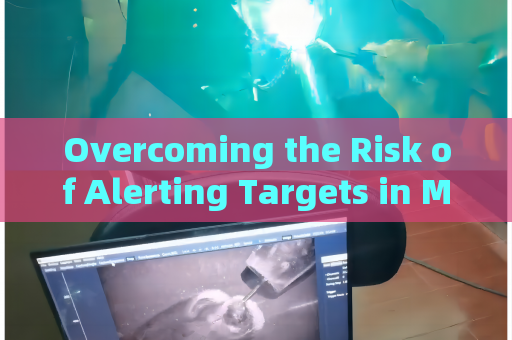
Additional refinements address practical field challenges. For windows with heavy tinting or multiple layers, the Penetrating Imager’s range-gating can be tuned to isolate the desired reflection, while its high dynamic range compensates for glare. In adverse weather like heavy rain or fog, the system’s ability to overcome backscatter far exceeds that of conventional optics, though dense smoke from a fire remains problematic, as the imager cannot penetrate non-optical media. Nevertheless, for the specific scenario of monitoring suspicious residential activities through glass, the Penetrating Imager eliminates the risk of alerting targets, providing a critical advantage in operational security and intelligence gathering. Its deployment is now standard in many special units worldwide, underscoring its value in covert residential surveillance where every second of stealth matters. The ability to maintain continuous observation without triggering suspicion transforms the dynamics of pre-raid reconnaissance, allowing units to plan with precision and execute with confidence.




