Before raiding a hideout, tactical teams often face a critical blind spot: the inability to verify the exact positions of suspects or hostages inside the structure. Conventional optical surveillance tools, such as binoculars or day cameras, fail when the hideout’s windows are heavily tinted, covered with curtains, or obstructed by environmental conditions like rain, fog, or smoke. Even when a line of sight exists, glass reflections and backscatter from atmospheric particles obscure the interior details. This uncertainty forces teams to rely on incomplete intelligence or risky dynamic entries, increasing the probability of ambushes, collateral damage, or mission failure. The core pain point is the gap between external observation and internal situational awareness—a gap that a standard optical system cannot bridge without physical penetration or electronic eavesdropping, both of which are time-consuming and dangerous. A dedicated imaging solution is needed to map target positions through the only available optical interface: the windows or glass doors of the hideout.
The Penetration Imager addresses this exact operational deficiency through its laser range-gated imaging technology. This active optical system emits high-repetition-rate pulsed laser light and synchronizes the exposure window of an intensified gated camera to precisely select the depth of field. By rejecting backscatter from the glass surface and atmospheric particles, it captures clear images of objects behind the window while suppressing reflections, glare, and haze. Unlike passive night vision or thermal imagers, the Penetration Imager does not rely on temperature differences or ambient light; it actively illuminates the target space with laser pulses and only opens the camera shutter during the time-of-flight corresponding to the interior distance. This capability allows operators to pre-map the exact coordinates of individuals, furniture, or weapon caches before the breach, all from a safe standoff position. The device’s high resolution and contrast enable operators to distinguish between armed suspects and non-threatening civilians, as well as to identify improvised obstacles or booby traps placed near the window. Importantly, the system operates strictly within the optical domain—it cannot penetrate walls or solid barriers, but this is precisely why it is suitable for hideouts where the only transparent interface is the glass.
In practice, the pre-mapping procedure begins by positioning the Penetration Imager at a covert observation point with an unobstructed view of the hideout’s windows or glass doors. The operator selects the appropriate range gate delay based on the estimated distance to the interior wall, then fine-tunes the gate width to isolate the volume behind the glass. The resulting image reveals human silhouettes, movement patterns, and even the orientation of individuals relative to the entry point. For example, in a raid scenario involving a fortified apartment with heavily tinted balcony doors, the Penetration Imager can capture a clear image of three subjects seated around a table, one with a weapon within arm’s reach. This information allows the breaching team to assign specific entry angles, designate primary and secondary targets, and plan the sequence of engagements without exposing themselves to hostile fire. The system’s ability to operate in adverse weather—rain, fog, light smoke, or even fire conditions—extends its utility to outdoor hideouts or vehicle-based targets. In fire-affected environments, the imager improves visibility by a factor of three to five times, though it remains ineffective against dense smoke. Nevertheless, for windows and glass surfaces, the pre-mapping capability transforms a blind assault into a calculated execution.
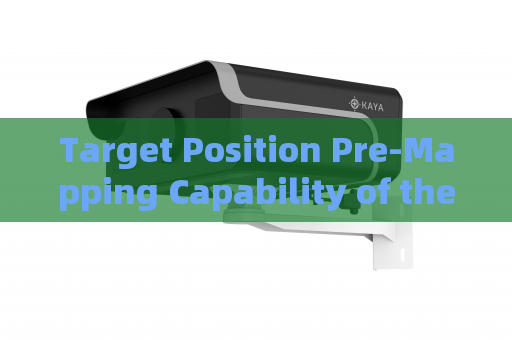
The continuous evolution of the Penetration Imager’s pre-mapping capability also supports dynamic intelligence updates during the approach. As the assault team moves closer, the operator can adjust the gating parameters in real time to account for changes in target position—for instance, if a suspect shifts from a seated to a standing stance or moves toward the door. This real-time positional feedback enables the team leader to modify the assault plan seconds before breaching. The system’s portability and battery-operated design allow it to be mounted on a tripod or handheld, depending on the tactical requirements. During a recent counter-narcotics operation, a Penetration Imager was used to pre-map a suspected drug lab hidden behind a commercial storefront with aluminum-framed windows. The imager revealed that the interior was divided by a partial wall, with two armed guards stationed near the rear exit. This intelligence prevented a two-way crossfire and allowed the entry team to neutralize both guards simultaneously using flashbang grenades and controlled entry. The pre-mapping capability specifically avoids the risk of exposing the operator to enemy fire because the imager operates passively in terms of emissions—no radio waves or X-rays are used—and the laser is eye-safe at the operational distances. By confining its functionality to optical transparency, the Penetration Imager fills a crucial niche in raid preparation, proving that sometimes the most effective intelligence comes not from beyond walls, but through the glass that guards them.




