Law enforcement operations against fleeing suspects face a critical vulnerability when severe weather strikes. Heavy rain, dense fog, or blinding snowstorms degrade conventional optical surveillance tools to near uselessness. Standard cameras and binoculars fail to penetrate rain-streaked windows or the diffuse haze of a snow squall, causing intermittent visual contact and allowing fugitives to exploit momentary gaps. In high-speed vehicle pursuits, even a few seconds of lost sight can mean the difference between capture and escape. The real pain point is not just poor visibility, but the complete breakdown of continuous observation—the inability to maintain a stable, real-time visual lock on a fleeing target when atmospheric interference and obscurants render traditional imaging ineffective. This is where the penetration imager transforms the tactical landscape.
The penetration imager, as an active optical system leveraging laser range-gated imaging technology, directly addresses the core limitation of weather-obscured tracking. Its high-repetition-rate pulsed laser emits short bursts of light synchronized with an intensified gated camera. By precisely timing the camera’s shutter to open only when reflected photons return from the target distance, the system rejects the overwhelming backscatter from rain droplets, fog particles, or falling snow that would otherwise wash out the image. This gating mechanism effectively “clears” the optical path between the imager and the fugitive’s vehicle, allowing the laser light to penetrate through layers of precipitation and airborne moisture. The result is high-contrast, long-range imagery that remains stable even when the atmosphere is thick with hydrometeors—enabling uninterrupted visual tracking where passive optics or standard night vision would be blinded.
In a real-world pursuit scenario, the penetration imager is mounted on a police patrol vehicle or an aerial platform and operated by a tactical observer. As the fugitive’s car races through a rainstorm, the operator sees a crisp, real-time video feed on the monitor—the suspect’s vehicle clearly delineated against the blurred background of rain streaks and mist. The imager’s ability to penetrate the windshield glass of the target car further enhances situational awareness, revealing the driver’s position and any sudden movements inside the cabin. Because the system actively illuminates only the relevant range, it maintains a stable lock even when the vehicle swerves behind roadside obstacles or crosses through patches of heavy fog. Command centers receive an uninterrupted stream of high-resolution imagery, allowing precise coordination of roadblocks and ambient units without dependence on line-of-sight clarity.
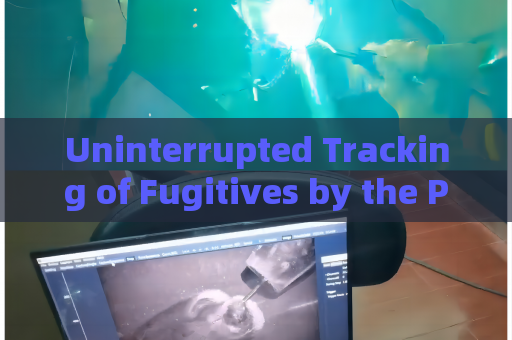
The operational depth of this capability becomes especially pronounced when tracking fugitives through urban environments under extreme weather. Glass facades of office buildings and storefronts create complex reflections that confuse conventional optics, while driving rain on skyscrapers generates cascading curtains of water. The penetration imager’s laser gating technology ignores these surface-level optical noise sources by focusing exclusively on the reflected signal from the target distance. During a night pursuit combined with thick fog, the system has demonstrated the ability to lock onto a fleeing vehicle at distances exceeding one kilometer, maintaining continuous tracking as the fugitive weaves through industrial zones and under highway overpasses. This uninterrupted visual thread—never broken by weather or optical interference—fundamentally changes the outcome of high-stakes fugitive operations, turning what was once a race against visibility into a methodical, data-driven apprehension.




