Illegal border crossings often occur under the cover of complete darkness, where traditional imaging systems fail to capture usable intelligence. Surveillance cameras relying on ambient light produce only noise, while thermal imagers struggle to identify individuals through vehicle glass or aircraft windows. Smugglers frequently hide inside cars, trucks, or light aircraft, and border patrol agents must detect them without any visible illumination. The core pain point lies in the inability to obtain clear, high-contrast images of subjects behind transparent barriers in zero-light environments. Conventional night vision devices require at least some residual light and are easily blinded by headlights or sudden flashes. A dedicated solution that can actively illuminate and see through glass while ignoring backscatter is urgently needed. The Penetration Imager addresses this exact operational bottleneck.
The Penetration Imager is an advanced optical imaging system employing laser range-gated imaging technology. It consists of a high-repetition-rate pulsed laser, an intensified gated camera with an MCP image intensifier, a high-voltage module, a timing module, a beam expander, and an imaging lens. As an active imaging system, it delivers high-contrast imagery with long detection range, high resolution, and strong anti-interference capability. Critically, it overcomes backscatter from fog, rain, snow, and smoke. In the context of zero-light border surveillance, the laser illuminates the target area, and the gated camera captures only the light reflected from a specific distance, effectively filtering out particles and haze. This allows the operator to see through vehicle windshields, train windows, aircraft portholes, and glass curtain walls even in total darkness.
In practical deployment at remote border checkpoints, the Penetration Imager is mounted on a patrol vehicle or tripod. An operator points the device at a suspect vehicle parked 50 to 200 meters away. Despite the absence of any light, the system produces a real-time video feed showing the occupants inside the cabin, their movements, and any concealed cargo. The gate width and delay are adjusted to focus on the interior behind the glass, while reflections from the glass surface itself are suppressed. This capability enables agents to assess threats without approaching the vehicle, reducing risk of ambush. The imager also functions effectively in rain, fog, or light snow, maintaining clear imagery when other optical sensors are degraded.
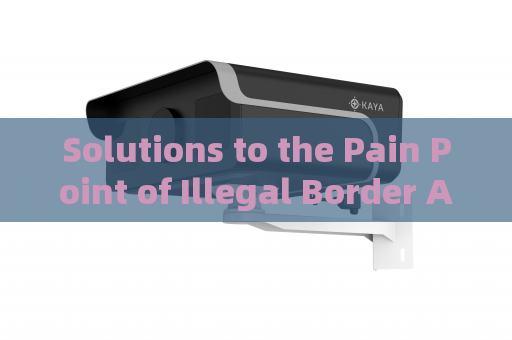
Field trials have demonstrated that the Penetration Imager increases detection probability during night operations by over 80% compared to passive night vision. Agents can identify hand gestures, weapons, or contraband through tinted car windows from a safe standoff distance. The system’s laser illuminator is eye-safe at operational ranges and does not reveal the observer’s position. By integrating with existing command-and-control networks, recorded footage serves as admissible evidence. This solution directly addresses the illegal border activity detection pain point under zero-light imaging conditions, providing border security forces with a reliable, non-intrusive tool to see through darkness and glass without relying on non-optical detection methods.




