In low-light imaging environments, such as nighttime surveillance operations or covert reconnaissance missions, conventional cameras struggle to capture high-definition data due to insufficient ambient illumination. The problem intensifies when the target is behind a transparent optical medium like a vehicle windshield or building glass, which introduces reflections, glare, and backscatter that degrade image clarity. Law enforcement and security personnel often face the dilemma of either deploying artificial lighting that compromises concealment or accepting blurry, unusable footage that fails to meet forensic standards. The inability to acquire clear, high-resolution imagery under these conditions directly impacts threat assessment, suspect identification, and evidence collection, leaving critical gaps in operational effectiveness.
The penetration imager, a laser range-gated active imaging system, directly addresses these challenges by combining a high-repetition-rate pulsed laser with an intensified gated camera. Unlike passive sensors that rely on ambient light, this system emits short-duration laser pulses synchronized with the camera’s ultra-fast gating mechanism. The built-in microchannel plate (MCP) image intensifier amplifies returning photons while the timing module rejects backscatter from atmospheric particles or glass surfaces, allowing only the light reflected from the target at a specific depth to reach the sensor. This technology effectively suppresses glare and reflection from transparent barriers, ensuring high-contrast, high-resolution data acquisition even in extreme low-light conditions. The penetration imager operates entirely within the optical spectrum, using no hazardous radiation, and is purpose-built for imaging through glass, flames, fog, rain, or snow.
In practical field deployment, operators simply mount the penetration imager onto a tripod or vehicle platform and adjust the laser pulse delay to match the target distance. For example, during a nighttime vehicle interdiction, the system can capture facial details of occupants through a tinted windshield from over 200 meters away, with resolution sufficient for biometric comparison. The built-in laser illuminator remains invisible to the naked eye, preserving tactical surprise. In fire-affected scenes, the imager enhances visibility by three to five times, though it cannot penetrate dense smoke—a critical limitation that operators must account for during mission planning. The ability to acquire frame-by-frame or continuous HD video under such adverse lighting and obscurant conditions makes the penetration imager a standard tool for tactical reconnaissance and evidence recording.
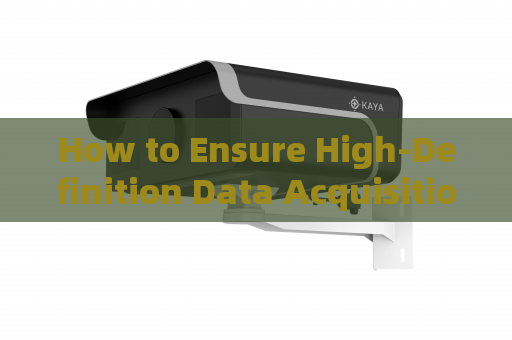
Beyond initial acquisition, the penetration imager supports real-time data streaming to command centers, enabling dynamic threat analysis without requiring operators to relocate. The gated imaging technique also mitigates motion blur caused by low frame rates, as each laser pulse freezes the scene instantaneously. This feature proves invaluable during high-speed pursuits or unstable observation platforms. By integrating the penetration imager into existing surveillance protocols, law enforcement agencies can ensure that high-definition data acquisition under low-light imaging environmental conditions becomes a reliable, repeatable capability rather than a tactical gamble.




