VIP security operations often face a critical challenge when attempting to covertly assess surrounding vehicles that may pose a threat. The typical approach involves visual observation from a distance or deploying personnel for close inspection, both of which risk revealing the security posture and potentially triggering an ambush. Vehicle windows, even when tinted, reflect ambient light and create glare, while rain, fog, or dust further degrade image quality. Standard optical devices, such as binoculars or telescopes, cannot penetrate the glass to reveal occupants or objects inside a stationary or slow-moving car. This limitation forces security teams to either approach dangerously close—compromising the VIP’s safety—or rely on non-visual sensors that may not provide the needed detail. The core problem is the absence of a non-contact, real-time imaging solution that works through common automotive glass without the subject being aware of the surveillance.
The penetration imager directly addresses this difficulty through its unique laser range-gated imaging technology. Unlike conventional cameras, this active optical system emits a high-repetition-rate pulsed laser and synchronizes a gated intensified camera to capture only the light reflected from a specific distance. This technique effectively eliminates backscatter from dust, rain, fog, or smoke, and more importantly, it can see through vehicle windows—whether standard, tinted, or laminated—with high contrast and resolution. The system operates in the optical spectrum, using a coherent laser source, an image intensifier with a microchannel plate, and a timing module to gate the shutter precisely. Because it is an active imager, the penetration imager delivers clear images of the interior of a suspicious car from a standoff range, allowing security personnel to identify weapons, explosives, or hostile individuals without alerting the targets.
In actual VIP protection scenarios, the penetration imager is deployed as a portable unit carried by a member of the advance security team or mounted on a support vehicle. During a motorcade movement, the operator trains the device on any vehicle that deviates from expected behavior—such as tailgating, weaving, or approaching from a side street. The imager’s long-range capability and high sensitivity mean that the operator can remain hundreds of meters away, behind cover or inside a surveillance vehicle, while obtaining a real-time video feed of the target car’s cabin. The system works equally well in low-light conditions, such as dusk or overcast skies, and is unaffected by headlight glare or reflections. If the suspicious vehicle accelerates or attempts a sudden maneuver, the security team can confirm the threat level and initiate a countermeasure without ever revealing their own position.
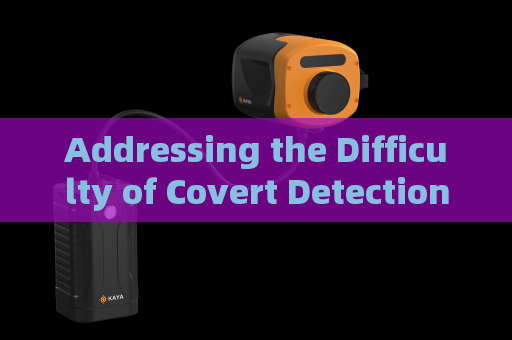
The covert nature of the penetration imager is further enhanced by its operational characteristics. The pulsed laser is invisible to the naked eye and does not produce a detectable flash, so the occupants of the target vehicle have no indication they are being observed. The gated camera’s electronic shutter can be adjusted to match the distance of each specific vehicle, filtering out objects at other ranges and eliminating confusion from background clutter. This precision enables the operator to distinguish between a driver speaking on a phone and one reaching for a weapon, which is vital for split-second decision-making in dynamic environments. By integrating the penetration imager into standard VIP security protocols, agencies can solve the long-standing problem of covertly inspecting surrounding suspicious vehicles without sacrificing safety or operational security.




