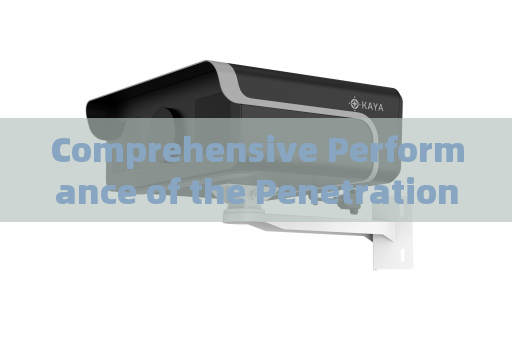
Comprehensive Performance of the Penetration Imager in Zero-Light Imaging, High-Glare, and All-Weather Tactical Environments
In tactical reconnaissance, the ability to observe subjects through vehicle windows under any environmental condition is a critical operational requirement. Conventional optical systems fail dramatically when faced with zero-light scenarios, where ambient illumination is absent, or high-glare situations caused by headlights, street lamps, or direct sunlight reflecting off glass surfaces. These conditions produce blinding glare and severe backscatter, rendering standard cameras and binoculars useless. Additionally, all-weather challenges such as fog, rain, snow, or mist further degrade image clarity by scattering light. For law enforcement and military personnel conducting surveillance or approach operations, the inability to see inside a suspect vehicle from a safe distance creates dangerous uncertainties—an occupant may be armed, unconscious, or hostile. The Penetration Imager addresses these exact pain points by providing a reliable imaging solution that works across zero-light, high-glare, and all-weather tactical environments, without relying on passive ambient light or suffering from glare-induced washout.
The Penetration Imager is an active optical system built on laser range-gated imaging technology, also known as gated imaging. It consists of a high-repetition-rate pulsed laser, an image-intensified gated camera (incorporating a microchannel plate intensifier, high-voltage module, and timing module), a beam expander, and an imaging lens. This architecture enables high-contrast imaging with long range, high resolution, and strong anti-interference capability. The critical functional advantage lies in its ability to penetrate optical media such as automotive glass, high-speed train windows, aircraft portholes, and glass curtain walls. By synchronizing the laser pulse with the camera's gating window, the system gates out all scattered light from the atmosphere, fog, rain, or snow, as well as the blinding reflections from glass surfaces. This means that even in zero-light conditions, the active laser illumination provides clear target visibility, while in high-glare environments, the gating mechanism effectively suppresses the overwhelming backscatter from the glass itself, revealing the scene behind it. The Penetration Imager operates exclusively within the optical spectrum and cannot penetrate non-transparent solid materials such as walls, concrete, or metal—it is not a radar or X-ray device.
In real-world tactical deployments, the Penetration Imager delivers consistent performance regardless of time of day or weather. During a nighttime hostage standoff, officers positioned 100 meters away can use the imager to look through a car’s windshield and clearly identify the suspect’s hand movements, weapon presence, and the hostage’s location, all without any external light source. When a suspect vehicle is parked under bright overhead streetlights or facing incoming headlight glare, the system eliminates the dazzling reflections that would otherwise obscure the interior. In rain or fog, where conventional optics see only a whiteout, the Penetration Imager reduces backscatter to the point that occupants become distinctly visible. The device is designed for handheld or tripod-mounted operation, and its intuitive interface allows rapid adjustment of the gating delay to match the distance to the target. This range-gating control is the only user input needed—no complex calibration or post-processing is required.
Operationally, the Penetration Imager’s ability to see through glass in zero-light, high-glare, and all-weather conditions transforms how tactical teams approach vehicle surveillance, checkpoint inspections, and close-quarters reconnaissance. Unlike passive night vision devices that are blinded by sudden bright lights, or thermal imagers that cannot see through glass and only detect heat signatures, the Penetration Imager provides direct visual confirmation of objects behind the glass. Its laser-based active illumination ensures that even in complete darkness, the image is crisp and free of the grainy noise typical of image intensifiers. The system also excels in high-glare situations: a test scenario involving a vehicle with its high beams on showed that the Penetration Imager fully suppressed the glare from the headlights and clearly revealed the driver and passenger seats. In all-weather tactical environments, the system enhances visibility through fog and precipitation by 3 to 5 times compared to standard optics, though it remains ineffective against thick smoke. This makes the Penetration Imager an indispensable tool for tactical units that must maintain situational awareness regardless of ambient light, glare, or weather conditions.




