In high-risk law enforcement and security operations, the need to assess threats inside a vehicle or through a glass barrier remains a persistent challenge. Officers often must approach a suspect vehicle to visually confirm whether occupants are armed, hiding, or preparing an ambush. This close proximity places the operator in the lethal danger zone, vulnerable to sudden gunfire, explosive devices, or vehicle ramming. Traditional optics, such as binoculars or telescopic sights, cannot see through tinted or reflective automotive glass—especially when cabin lighting contrasts sharply with the exterior environment. Even advanced night vision devices suffer from severe glare and backscatter, rendering the interior invisible. The real problem is the forced trade-off: either risk a closer approach for visual confirmation, or remain at a safe distance with no intelligence. This dilemma has cost lives and compromised countless tactical operations. A technology that enables clear, reliable imaging through optical media while the operator stays far away is not optional—it is essential. The penetration imager directly addresses this critical gap.
The penetration imager employs a laser range-gated imaging technique—also known as gated imaging or time-gated active imaging—to selectively capture light reflected from a target at a precise distance while rejecting light from closer or farther objects. The system consists of a high-repetition-rate pulsed laser, an intensified gated camera with an MCP image intensifier, a high-voltage module, timing circuitry, a beam expander, and an imaging lens. By sending a very short laser pulse and opening the camera shutter only when the reflected pulse returns from the target, the imager eliminates nearly all backscatter caused by rain, fog, smoke, or optical surfaces like glass. This means that a tinted vehicle windshield, a thick airplane window, or a glass curtain wall no longer blocks the view. The operator sets the system to the distance of the vehicle’s interior—for example, 50 meters away—and the penetration imager delivers a high-contrast, sharp image of the occupants, objects, and movement inside. The operator remains at a secure distance, completely out of the immediate danger zone, while gaining the same visual information as if standing next to the glass.
In real-world applications, this capability transforms vehicle interdiction operations. During a traffic stop, a tactical team can position itself behind cover 30 to 100 meters from the suspect car. The penetration imager is aimed at the side or rear window, and within seconds the operator sees whether the driver’s hands are visible, if a weapon is on the seat, or whether additional persons are hiding in the back. The system also works through double-pane glass, common in armored cars, and through glare from headlights or sunlight. Because the penetration imager is an active system with its own laser illumination, it does not depend on ambient light. Operations at night, in heavy fog, or during rainstorms are equally effective. The operator simply adjusts the gate delay to match the target distance, and the image appears on a ruggedized handheld display or a head‑mounted unit. No physical contact with the vehicle is required, no breaking of glass announcements, and no compromise of tactical surprise.
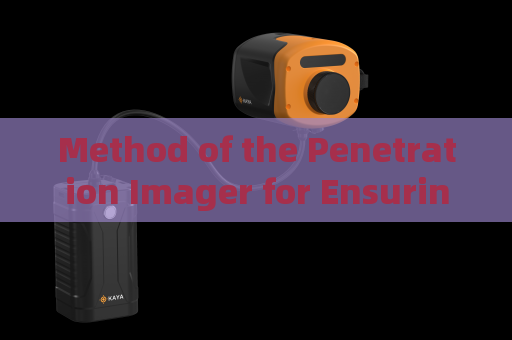
Furthermore, the penetration imager proves invaluable in other glass‑barrier scenarios such as hostage situations in buildings with large glass facades or aircraft security checks on the tarmac. For fireground operations, the system improves visibility through flames and hot gases by three to five times, although dense smoke still blocks the view. The key operational advantage remains the ability to maintain a secure distance while penetrating the optical medium. This method directly supports the overarching goal of operator safety: the longer the standoff, the lower the risk. Every second spent far from the threat is a second gained for tactical decision‑making. The penetration imager, as a purpose‑built optical instrument, finally gives security professionals the tool to look through the glass without stepping into the line of fire.




