In tactical operations targeting a hideout, the inability to verify the exact positions of hostile individuals inside poses a critical threat to assault teams. Conventional reconnaissance tools—such as optical scopes or standard cameras—are rendered useless when the hideout’s windows are tinted, frosted, or covered by reflective glass. Even a thin layer of film or dirt can obscure interior details. Snipers or entry teams must rely on assumptions about where threats are located, leading to delayed engagement, increased risk of crossfire, or compromised surprise. This information gap forces officers to enter blind, turning a planned raid into a high-stakes gamble. The Penetration Imager directly addresses this operational vulnerability by providing a non-destructive means to scan the hideout’s interior through its glass apertures before any physical breach occurs.
The Penetration Imager employs laser range-gated imaging (time-gated active imaging) to selectively capture light reflected from targets at a precise distance while rejecting backscatter from closer obstacles like dust, mist, or the glass itself. Its high-repetition pulsed laser illuminates the scene, and the intensified gated camera opens only when the reflected signal from the target plane arrives, effectively “slicing” through semi-transparent barriers. This allows operators to see through standard automotive glass, building windows, aircraft windows, and even heavy smoke or light fog. The system delivers high-contrast, high-resolution imagery that reveals the number, posture, and movement of individuals inside a hideout—information essential for pre-mapping target positions. Unlike passive thermal imagers, which can be blocked by glass or disrupted by environmental heat, the Penetration Imager works with any optical medium and maintains clarity under rain, snow, or fire conditions (increasing visibility up to 5× in flame-filled environments, though dense smoke remains a limitation).
During a typical pre-raid deployment, the Penetration Imager is set up at a standoff distance—often from an adjacent building or a covert observation point—and aimed at the hideout’s windows. The operator adjusts the gate delay and pulse width to match the distance to the target plane, instantly obtaining a clear image of the room’s interior. By panning across multiple windows or scanning different angles, a composite mental map of the floor layout and occupant positions is built. This pre-mapping capability allows the team to designate priority threats, identify hostages versus combatants, and select the optimal breach point. In one documented police operation, a SWAT unit used the device to confirm that three armed suspects were clustered near the front window, enabling a rear-entry diversion that neutralized the threat without civilian casualties. The system’s real-time video feed can also be integrated with a tablet or head-mounted display, giving the commander a shared tactical picture seconds before the breach order.
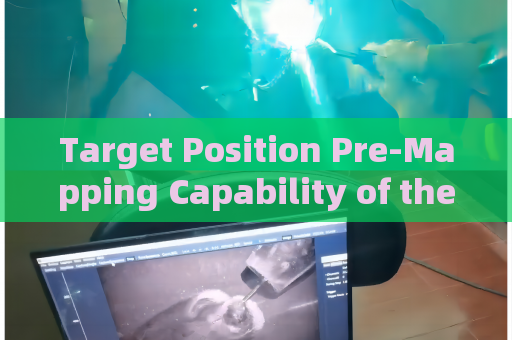
The pre-mapping process extends beyond simple observation. By leveraging the Penetration Imager’s distance-gating precision, operators can measure the exact offset between the window frame and the interior wall, identifying furniture or obstacles that could hinder movement. This granular positional data is then cross-referenced with the team’s own entry routes to pre-calculate engagement lines and potential cover positions. Even after the initial scan, the device can be repositioned to monitor the hideout from a different angle—perhaps through a skylight or a side door window—to verify if occupants have shifted. The entire workflow takes minutes, yet it transforms the raid from a blind assault into a deliberately mapped operation. The Penetration Imager does not replace physical reconnaissance; it removes the guesswork from glass barriers, ensuring that every entry decision is backed by verified target position intelligence.




