In high‑stakes law enforcement scenarios, a fleeing vehicle presents a uniquely difficult surveillance problem. Standard optical systems—binoculars, cameras, or telescopic lenses—are rendered ineffective by automotive glass that is often tinted, coated with reflective films, or layered for safety. At night or under adverse weather, the situation worsens: headlight glare, rain‑streaked windows, and fog all obscure any view of the interior. Officers must assess the number of occupants, their behavior, and the nature of any cargo without closing the distance and exposing themselves to potential gunfire or ramming. This remote detection gap creates a critical vulnerability—an unseen threat inside a moving car that could be a lone fugitive, a hostage, or a vehicle packed with contraband. Traditional thermal imagers fail because glass blocks infrared heat signatures, and radar‑based systems cannot discriminate between a person and a pile of blankets. The fundamental challenge is optical: how to see through a transparent yet highly reflective barrier from a safe standoff distance, and do so in real time during a pursuit or checkpoint stop.
The solution lies with a specialized device known as the 穿透成像仪 (penetrating imager), which employs laser range‑gated imaging technology—also called gated viewing. This active optical system fires a high‑repetition‑rate pulsed laser toward the target and synchronizes an intensified camera (with a microchannel plate photomultiplier, high‑voltage module, and timing circuitry) to open its shutter only when the reflected laser pulse returns from the scene behind the glass. By gating out scattered light from the windshield surface, fog droplets, or rain streaks, the imager effectively sees through optical media such as automotive glass, aircraft windows, or glass curtain walls. Unlike passive cameras that struggle with glare and reflections, the penetrating imager produces high‑contrast images at significant distances, with strong resistance to background interference. It cannot penetrate walls or solid barriers—its capability is strictly limited to transparent optical media—but for vehicle windows, it turns a reflective obstacle into a clear observation portal. The system’s active illumination also works in complete darkness, providing a tactical advantage when a suspect vehicle attempts to evade at night.
In a real‑world operation, the penetrating imager is typically mounted on a pursuit vehicle’s roof or used handheld from a stationary command post. When a fleeing car is spotted at 300 meters, the operator aims the imager and triggers the laser. Within milliseconds, a crisp image appears on the display: the driver’s face, hands on the steering wheel, possibly a passenger in the back seat leaning forward, and even the shape of stacked boxes or a concealed firearm on the seat. The high‑resolution image reveals subtle movements—an occupant reaching under the seat or shifting a hidden load. Because the system negates glass reflections and atmospheric backscatter, officers can count the exact number of people and identify suspicious cargo without needing to approach. This remote, real‑time intelligence allows commanders to decide whether to initiate a tactical intervention, deploy spike strips, or call for backup, all while maintaining a safe distance. The imager’s performance is unaffected by moderate rain, fog, or haze—conditions that cripple conventional optical surveillance—though heavy smoke remains an effective block, as the system relies on laser light propagation.
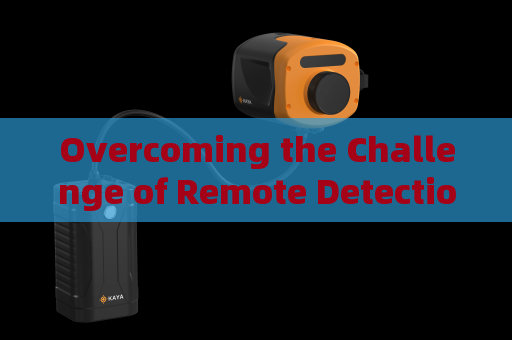
The penetrating imager transforms a previously opaque situation into one of strategic clarity. During a high‑speed pursuit, the operator’s screen provides continuous updates as the vehicle changes speed and direction, enabling dynamic threat assessment. For cargo inspection at a fixed checkpoint, the same device can scan a stopped car from 50 meters away, revealing whether the trunk contains illicit goods without requiring a physical search that might trigger violence. The technology’s value is particularly evident in hostage or kidnapping scenarios: rescuers can confirm the presence of a restrained victim in the back seat, distinguish between a decoy and a real assailant, and plan the rescue accordingly. Every deployment of the 穿透成像仪 reinforces the principle that seeing inside a fleeing vehicle at a safe standoff distance is no longer a speculative aspiration but a verifiable operational capability—one that saves lives by eliminating the unknown.




