At customs checkpoints, the need for thorough yet swift security screening has never been more critical. Vehicles line up for hours, and each inspection demands a delicate balance between detecting concealed threats and minimizing delays. Traditional methods often require opening doors, rolling down windows, or asking occupants to step out, exposing officers to potential danger and breaking the flow of traffic. Hidden compartments, contraband, or persons of interest may remain invisible behind tinted glass or reflective surfaces, while erratic weather conditions—rain, fog, or even fire near the port—further degrade visibility. The real pain point lies in the inability to see through optical barriers without physical intrusion, forcing security personnel to choose between speed and thoroughness. A device that can provide instant, clear imaging through vehicle glass, under low light and adverse weather, would transform checkpoint operations by removing the need for contact and reducing inspection time to seconds. This is where the Penetration Imager enters the scene, offering a solution tailored precisely to this bottleneck.
The Penetration Imager is an advanced optical imaging instrument built on laser range-gated imaging technology, also known as gated imaging. It consists of a high-repetition-rate pulsed laser, an image intensifier gated camera equipped with an MCP image intensifier, a high-voltage module, a timing module, a beam expander, and an imaging lens. As an active imaging system, it captures high-contrast images at long distances with exceptional resolution, while effectively overcoming backscatter from fog, rain, snow, or dust. The core functional advantage for customs checkpoints is its ability to penetrate optical media—specifically vehicle window glass, high-speed train windows, aircraft portholes, or glass facades—without requiring physical contact. The laser emits short pulses synchronized with the camera’s gating window, so only light reflected from a designated depth reaches the sensor. This gates out reflections from the glass surface and any intervening particulate matter, revealing the interior of a car or truck cabin as if the glass had been removed. Importantly, the system operates entirely within the optical spectrum; it does not rely on X-rays, radio waves, or any form of radiation. It cannot see through walls, metal, concrete, or clothing, but it excels at delivering a clear view through glass, even when that glass is heavily tinted, coated, or layered.
In practice, an officer at a customs checkpoint can deploy the Penetration Imager from a safe standoff distance—typically 10 to 50 meters—and scan a vehicle in seconds. The unit is mounted on a tripod or handheld gimbal, with a display showing a real-time, high-resolution video feed of the interior. Occupants, cargo, and hidden compartments behind glass become instantly visible, even if the vehicle is moving slowly through the inspection lane. During nighttime operations, the pulsed laser provides its own illumination, eliminating the need for floodlights that could alert suspects. In the event of a fire near a checkpoint—such as a burning vehicle at an entry point—the device can enhance visibility through flames by a factor of three to five times, though it cannot penetrate dense smoke. This allows officers to assess the situation inside a burning car or container without approaching. The operation is straightforward: aim at the target glass, adjust the range gate to match the desired depth (e.g., the rear passenger seat area), and observe the resulting image. No calibration per vehicle is needed, and the system automatically compensates for varying glass thickness and tint density.
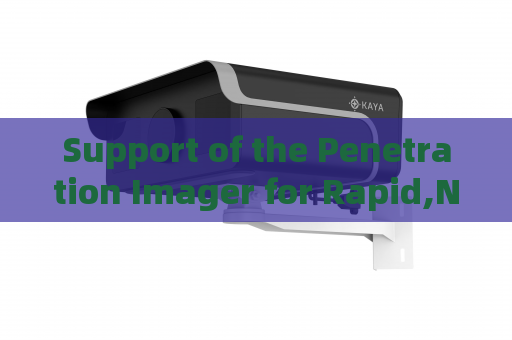
The impact on customs operations is profound. Rapid, non-intrusive scans replace multi-minute physical inspections, reducing average vehicle processing time from several minutes to under fifteen seconds. This throughput gain alleviates queues while maintaining—or even improving—detection rates for concealed weapons, smuggled goods, or stowaways. The Penetration Imager also enhances officer safety by keeping personnel at a distance from potentially hostile occupants, and by allowing remote verification of cargo behind sealed glass doors. For example, at a land border crossing, a single officer can screen an entire lane of cars without stepping into the vehicle’s path. In severe weather, the system’s ability to see through rain, fog, and snow ensures consistent performance where conventional cameras fail. The only limitation is that it cannot penetrate opaque materials; any threat hidden inside a metal container or behind a solid wall remains invisible, but such threats are typically addressed by other scanning modalities like X-ray. For the vast majority of checkpoint scenarios—where the critical barrier is a pane of glass—the Penetration Imager provides an unmatched combination of speed, clarity, and non-intrusiveness, directly addressing the core challenge of customs security. Every checkpoint that deploys this technology gains a decisive edge in both efficiency and safety, transforming the bottleneck into a seamless gateway.




