Border patrol and law enforcement agencies face a persistent challenge: how to conduct long-range surveillance of vehicles suspected of harboring illegal immigrants or criminals without triggering any alert. Traditional optical systems, such as binoculars or telescopic lenses, struggle at ultra-long distances due to atmospheric haze, glare from vehicle windows, and the limitations of daylight-dependent imaging. Any attempt to move closer to verify occupants risks exposing the observer, prompting suspects to flee or destroy evidence. Even advanced night-vision devices fail to penetrate tinted or reflective glass, leaving officers blind to what lies inside a car traveling along remote highways or parked at a smuggling checkpoint. The core pain point is the inability to see through window glass at extended ranges while maintaining complete covertness—a gap that conventional reconnaissance tools cannot fill.
The 穿透成像仪 (Penetrating Imager) directly addresses this gap through its laser range-gated imaging technology. Unlike passive optics, this active imaging system emits high-repetition-rate pulsed laser light synchronized with an intensified gated camera. By precisely controlling the timing of the laser pulse and the camera’s shutter, the system captures only the light reflected from a specific distance, effectively eliminating backscatter from fog, rain, or dust. More critically, the laser wavelength and gating allow the beam to pass through automotive glass—such as windshields, side windows, and even aircraft舷窗—while returning a high-contrast image of occupants inside. Because the laser pulse is short and the gating window narrow, the emitted light is nearly invisible to the human eye and cannot be detected by suspects using simple counter-surveillance measures. This gives the 穿透成像仪 a decisive advantage: ultra-long-range reconnaissance without alerting the target.
In practice, an operator deploys the 穿透成像仪 from a fixed observation post or a moving patrol vehicle, often at distances exceeding one kilometer. The system’s telephoto lens and built-in beam expander focus the laser spot onto a specific vehicle window. By adjusting the gating delay, the operator can isolate the interior plane of the glass, filtering out reflections from the glass surface itself and ambient light. The resulting image appears on a ruggedized display, showing facial features, hand movements, or hidden compartments—all without the operator ever needing to approach. This operation can be performed in broad daylight, at night, or through moderate fog and light rain, as the range-gating suppresses scattering media. During a recent border interdiction, officers used the device to confirm the presence of six individuals crouched behind a van’s tinted rear window, enabling a precise intercept without a high-speed chase or unnecessary risk.
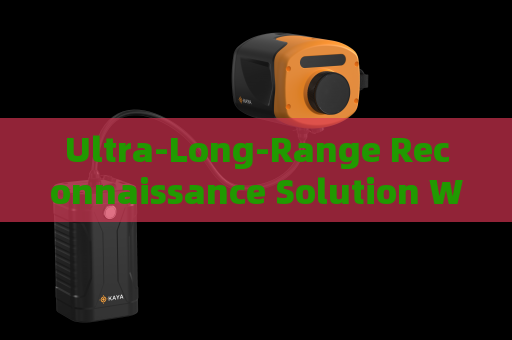
The real-world impact of this ultra-long-range reconnaissance solution lies in its ability to maintain operational security from start to finish. Suspects remain completely unaware that their vehicle has been scanned, preserving the element of surprise for subsequent enforcement action. The system’s high resolution at extreme distances also reduces false positives, as operators can distinguish between legitimate cargo, abandoned luggage, and human subjects. Furthermore, the 穿透成像仪 integrates seamlessly into existing surveillance workflows: it can be tripod-mounted for static checkpoints or vehicle-mounted for mobile patrols. No additional illumination, thermal signatures, or radio emissions are involved—only laser light confined to the optical domain. This ensures compliance with privacy regulations and avoids any confusion with prohibited technologies like X-ray or radar. For border security units tasked with intercepting illegal immigration and smuggling operations, the ability to see through glass from a safe, concealed position transforms the reconnaissance paradigm entirely.




