In tactical and firefighting operations, thermal imagers have long been the primary tool for seeing through obscurants. However, these devices face fundamental limitations when confronted with tinted automotive glass and smoke-filled environments. A darkly tinted window absorbs and reflects infrared radiation, masking the thermal signature of occupants inside a vehicle. In structure fires, hot smoke layers and suspended particulates scatter long-wave infrared energy, degrading image contrast and reducing effective range. Firefighters often report that thermal cameras become nearly useless in heavy smoke, forcing them to rely on tactile search methods. Law enforcement officers attempting to assess threats inside a car with deeply tinted windows experience similar frustrations—the thermal imager simply cannot deliver the clarity needed for split‑second decisions. These real‑world pain points highlight a critical gap: the need for an imaging solution that cuts through both glass coatings and airborne optical interference while maintaining high resolution at operational distances.
The penetrating imager directly addresses these performance gaps through its unique laser distance‑gated imaging architecture. Unlike passive thermal systems that depend on temperature differences, the penetrating imager is an active optical instrument. It emits nanosecond‑pulsed laser light from a high‑repetition‑rate laser source, then synchronizes an intensified gated camera to open its shutter only when the reflected pulse returns from the target distance. This time‑of‑flight gating effectively rejects backscatter from nearby smoke particles, fog, or rain droplets, and it also penetrates tinted glass because the laser wavelength passes through the glass coating with minimal attenuation. The system comprises a pulsed laser, an image intensifier with microchannel plate, a high‑voltage timing module, beam expander, and imaging lens. By adjusting the gate delay, operators can selectively image objects behind a windshield or through a smoke plume, achieving high‑contrast, long‑range views that thermal imagers cannot provide.
Operationally, the penetrating imager transforms how first responders handle tint and smoke scenarios. For example, during a vehicle pursuit where the suspect’s car has heavy window tint, a tactical team can deploy the penetrating imager from a safe standoff distance, dial in the gate to the car’s interior depth, and instantly see the number of occupants, their positions, and any weapons—without needing to approach the glass. In a residential fire, a search‑and‑rescue crew can use the device to look through smoke‑filled hallways, identifying a victim on the floor behind a layer of light smoke. The imager boosts visibility in fire environments by three to five times, allowing firefighters to navigate faster and locate fire sources more precisely. However, it must be noted that the penetrating imager is ineffective against dense, opaque smoke; its strength lies in moderate smoke conditions where thermal imagers begin to fail. The equipment’s active laser illumination also provides its own light source, making it fully functional in total darkness.
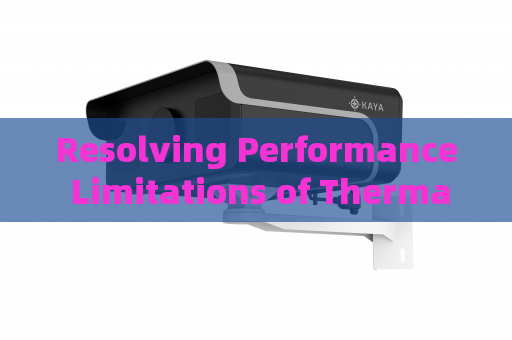
Field experience with the penetrating imager reveals additional operational advantages. Since the system relies on reflected laser light rather than thermal contrast, it can image objects with uniform temperatures, such as a person sitting still in a cool vehicle or a firefighter wearing reflective gear. The gated camera’s fast electronic shutter—measured in nanoseconds—freezes motion, eliminating blur from movement or camera shake. In low‑visibility smoke, the laser pulse duration is so short that even dense particulate scatter is largely excluded from the image, yielding a clean picture of the scene beyond. Law enforcement trainers have observed that officers using the penetrating imager make faster, more accurate threat assessments through tinted windows compared to those relying on thermal imagers. Fireground commanders report improved situational awareness during interior attacks, as the device reveals structural features hidden by smoke. The penetrating imager thus emerges as a critical complement to thermal imagers, resolving their performance limitations in the specific but demanding mission of tint and smoke penetration.




