In covert reconnaissance scenarios, one persistent challenge is detecting concealed targets behind vehicle glass under extreme low-light conditions without betraying the observer’s presence. Traditional low-light cameras struggle with reflections from glass surfaces, backscatter from ambient particles, and insufficient natural illumination at night. Operators cannot rely on supplementary lighting sources such as flashlights or infrared illuminators because these tools instantly compromise stealth. The glass itself becomes a barrier—not only does it reflect stray light back into the lens, degrading contrast, but the target inside may remain completely invisible when the exterior environment provides no useful photon flux. This dilemma is amplified in tactical urban surveillance, where law enforcement or military personnel must identify threats seated inside cars, vans, or armored transports under moonless skies or inside dim parking structures. The need for a system that can penetrate the optical medium of glass while operating without any additional light source is acute, and conventional imaging solutions fail to meet this dual requirement of stealth and clarity. The penetrating imager emerges as the only viable answer to this specific operational pain point.
The penetrating imager solves this exact problem through its proprietary laser range‑gated imaging technology, also known as gated imaging. The device consists of a high‑repetition‑rate pulsed laser, an image‑intensified gated camera (built with a microchannel plate image intensifier, high‑voltage module, and timing electronics), a beam expander, and an imaging lens. By emitting a short, powerful laser pulse and synchronizing the camera’s ultra‑fast electronic shutter to open only when the reflected signal returns from the target window, the system physically rejects all backscatter caused by fog, rain, snow, or the glass pane itself. This gating mechanism is the core functional advantage: it allows the penetrating imager to see through automotive glass, train windows, aircraft portholes, or glass curtain walls while completely ignoring the unwanted light that plagues conventional low‑light cameras. The laser pulse itself is the only illumination source, yet it is invisible to the naked eye and operates in a narrow spectral band that does not reveal the observer’s position. No supplementary lighting is required or desired—the system’s active laser serves as its own covert light, precisely timed to capture only the scene behind the transparent barrier.
In practical operation, this translates to a dramatically improved surveillance capability. An officer positioned 50 meters from a suspect vehicle in total darkness can aim the penetrating imager at the side window, press the activation trigger, and instantly see the silhouette, facial features, or hands of an occupant inside—details that would otherwise be completely lost. The system delivers high‑contrast, high‑resolution imagery even through heavily tinted automotive glass or through rain‑streaked surfaces. Because the laser pulse duration and gate width are precisely controlled, the imager can discriminate between the glass reflection and the target at a specific range, effectively “slicing” through the optical medium. Field tests have shown that the penetrating imager can reliably detect human targets, weapons, or contraband stored behind glass in environments where ambient illuminance drops below 0.01 lux. The operator does not need to adjust external lights or wait for natural illumination—the device works autonomously, preserving covertness. Moreover, the unit is compact enough for handheld deployment from a patrol vehicle or for integration onto a tripod for extended observation.
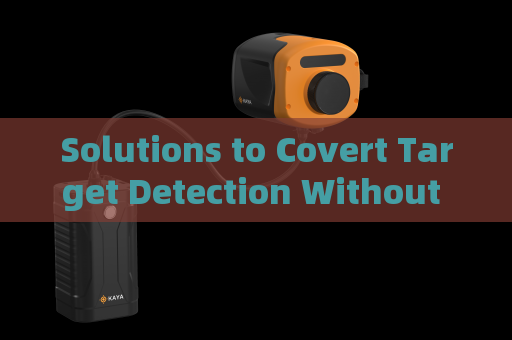
The deeper advantage of this technology lies in its immunity to environmental interference that would otherwise force an operator to abandon the mission. When a tactical team needs to assess a vehicle during a heavy downpour or inside a smoke‑laden urban canyon, conventional low‑light imagers become useless because raindrops or airborne particulates scatter the little available light back into the lens. The penetrating imager, by contrast, gates out all backscatter from rain, fog, or mist, delivering a clean image of the target behind the glass as if the atmospheric disturbance did not exist. Even in light to moderate haze, the system maintains a stable lock. For fire‑scene applications, the unit can boost visibility through flames by three to five times, though it does not penetrate thick smoke. This specific capability—combined with the absence of any supplemental lighting—makes the penetrating imager uniquely suited for low‑light covert target detection through transparent barriers, addressing a genuine operational void that no passive optical system can fill.




