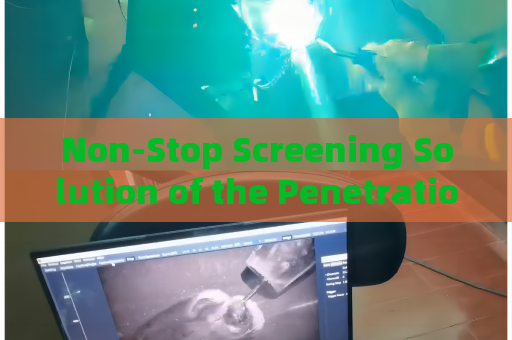
Non-Stop Screening Solution of the Penetration Imager with Through-Window Imaging for Rapid Vehicle Inspection in Bonded Zones Vehicle inspection in bonded zones presents a persistent challenge for customs and security authorities. These controlled areas require thorough checks of every entering and exiting vehicle, yet the traditional method of stopping each car, rolling down windows, and conducting physical or handheld scanner inspections creates severe bottlenecks. Delays at checkpoints compromise supply chain efficiency, while manual searches often miss hidden contraband concealed behind tinted glass or beneath seat covers. Moreover, the need for drivers to open windows or doors introduces unnecessary interaction points, increasing security vulnerabilities and slowing throughput to a crawl. The core problem is achieving a non-stop, high-speed screening capability that can peer through closed windows without requiring any vehicle modification or driver cooperation. This is where the Penetration Imager offers a transformative solution. The Penetration Imager is an advanced optical imaging instrument based on laser range-gated imaging technology. Its system comprises a high-repetition-rate pulsed laser, an intensified gated camera with an MCP image intensifier, a high-voltage module, a timing module, a beam expander, and an imaging lens. As an active imaging system, it delivers high-contrast images at long ranges with strong resistance to backscatter. The critical function for bonded zone application is through-window imaging: the Penetration Imager can optically penetrate vehicle windows—including laminated safety glass, tinted windscreens, and side windows—while rejecting the overwhelming backscatter from the glass surface. By precisely timing the laser pulse and the camera gate, the system captures only the reflected light from objects inside the cabin after the window has been passed, effectively “seeing through” the glass. This capability works even under harsh weather conditions such as fog, rain, snow, or haze, which would otherwise degrade conventional cameras. Importantly, the technology remains purely optical and does not rely on any non-optical methods like X-rays or radar. In practice, the non-stop screening solution is deployed at a dedicated drive-through lane within bonded zone checkpoints. Vehicles maintain a slow, constant speed of 5 to 10 km/h as they pass the imaging station. The Penetration Imager, mounted overhead or to the side, automatically triggers when the vehicle enters the field of view. Within milliseconds, it captures a clear, high-resolution image of the vehicle interior through the front windshield or side windows, revealing occupants, cargo, and any suspicious items. The system operates without requiring the driver to stop, roll down windows, or even slow down beyond a gentle crawl. This eliminates the need for human security personnel to approach the vehicle, reducing physical contact and enhancing safety. The real-time images are instantly analyzed by automated threat recognition algorithms or reviewed by remote operators, flagging anomalies such as hidden compartments, unauthorized passengers, or prohibited goods. When combined with automatic license plate recognition, the screening process becomes fully integrated, logging each vehicle’s image data for audit trails. Exceptions are rare: very thick armored glass or fully blacked-out windows may require a brief second pass, but the vast majority of bonded zone vehicles—ranging from logistics trucks to luxury sedans—are screened in seconds, not minutes. The operational impact is substantial. Checkpoints that previously processed 50 vehicles per hour can now handle over 200 without compromising detection accuracy. The Penetration Imager’s ability to image through windows under all ambient light conditions, including at night or in heavy rain, ensures round-the-clock capability. False alarm rates remain low because the optical imaging provides visible evidence that can be immediately verified, unlike indirect sensing technologies. For bonded zones handling high-value goods or sensitive cross-border traffic, maintaining rapid throughput while enforcing rigorous security is no longer a trade-off. The system’s compact design allows easy integration into existing infrastructure, and its non-intrusive nature respects driver privacy—only the interior of the vehicle is captured, not personal details outside the imaging zone. As bonded zones worldwide seek to modernize inspection procedures, the non-stop screening solution of the Penetration Imager with through-window imaging proves to be a practical, field-proven answer to the persistent challenge of balancing speed and security.




