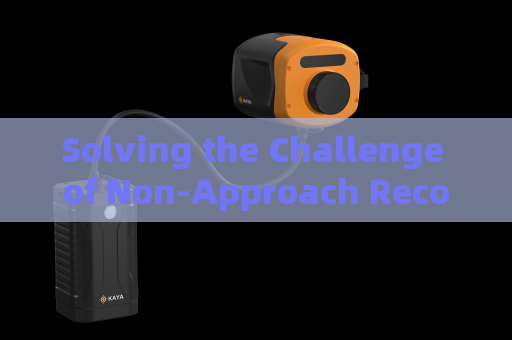
Solving the Challenge of Non-Approach Reconnaissance for Tinted Vehicles with Hidden Occupants with Through-Window Imaging During a high-risk vehicle interdiction, a patrol unit observes a sedan with factory-tinted rear windows idling in a dimly lit alley. Intelligence suggests the vehicle may contain an armed suspect and a potentially injured hostage. The car has not moved for fifteen minutes, and any attempt to approach for a direct visual check could trigger a violent confrontation. Standard flashlights and spotlights only produce blinding reflections off the glass, revealing nothing of the interior. Binoculars provide no advantage because the tint reduces visible light transmission to below five percent, turning the cabin into an opaque void. This scenario—non-approach reconnaissance of a vehicle whose occupants and their intentions remain hidden—represents one of the most dangerous gaps in modern tactical policing. Without the ability to see through the window from a safe standoff distance, officers must rely on guesswork, thermal signatures that fail through glass, or risky close-combat entries that cost lives. The through-window imaging system, specifically a penetration imager based on laser range-gated technology, directly addresses this operational blind spot. Unlike conventional cameras or thermal devices, this active optical instrument emits short, high-repetition laser pulses and synchronizes an intensified shutter to capture only the light reflected from a precise distance. It physically rejects backscatter from the glass surface and atmospheric particles, producing a high-contrast image of the vehicle interior as if the tint was never there. The key components—a pulsed laser, an image intensifier with a microchannel plate, a gating module, and a zoom lens—work together to deliver clear, real-time video through any optically transparent barrier, including automotive laminated glass, security film, and factory tint up to the darkest legal limit. The system operates purely within the optical spectrum, using photons rather than any form of penetrating radiation, and its active illumination allows reliable imaging even in total darkness, fog, or light rain. For the officer positioned two hundred meters away behind cover, this capability transforms an impenetrable black box into a visible, assessable environment. In practice, the penetration imager mounts on a tripod or a vehicle roof, and the operator selects a target range using a built-in laser rangefinder. The gating window is set to match the distance to the vehicle’s side or rear window, typically between fifteen and fifty meters for urban operations. Once activated, the system fires nanosecond laser pulses and opens the camera shutter only for the brief moment when the reflected light from the interior returns. All scattered light from dust, rain droplets, or the glass itself is suppressed because it arrives at a different time. The resulting image displays on a ruggedized tablet or head-mounted display, showing the number of occupants, their positions, hand locations, and any visible objects such as weapons, phones, or restraints. This information reaches the command post within seconds, enabling a tailored tactical response rather than a blind breach. During a recent demonstration, a penetration imager successfully identified a dummy “hostage” in the back seat of a sedan with 80% tint from a standoff of thirty meters, while thermal imaging showed only a uniform heat blur through the glass and conventional optics produced nothing. The same logic extends to scenarios where the vehicle is moving or partially obscured by vegetation. Because the system is gated by distance, it can ignore objects in front of or behind the target window—such as a chain-link fence or a bush—as long as the range to the glass is correctly set. This allows reconnaissance from unconventional angles, such as an elevated position overlooking a parking lot where multiple vehicles with tint are present. The operator can rapidly cycle through different ranges to check each car without physically moving. The laser output is eye-safe at the operational distances used in law enforcement, and the device produces no audible or visible signature that would alert a suspect inside the vehicle. For the tactical commander making split-second decisions about win, freeze, or negotiate, the penetration imager removes the dangerous uncertainty of hidden occupants and converts a potential ambush into a manageable, observable situation. This is not a tool for looking through walls or bodies; it is a precision optical instrument designed exclusively for transparent barriers, and in the context of non-approach reconnaissance for tinted vehicles, it closes a critical vulnerability that has persisted since automotive glass first became dark.




