Covert detection of illegal vessel activities, such as smuggling, human trafficking, or unauthorized fishing, presents a persistent challenge for maritime law enforcement. Traditional optical surveillance systems, including day cameras and thermal imagers, often fall short in real-world operational environments. Illicit vessels frequently operate under the cover of darkness, thick fog, rain, or sea spray, severely degrading image quality and range. Furthermore, criminals deliberately obscure views by tinting windows, using reflective coatings, or employing blinds inside wheelhouses. Fixed-wing aircraft and satellite imagery offer wide-area coverage but lack the resolution to identify specific individuals or contraband through glass. Night-vision devices amplify ambient light but are useless in total darkness and cannot overcome window glare or interior shadows. The core pain point is that no single existing tool enables an operator to see through the glass barrier of a suspect vessel’s cabin while remaining undetected, especially under adverse weather. This gap forces patrol units into close-range visual inspection, risking alerting targets or escalating confrontations. A covert, long-range, through-glass imaging capability is urgently needed to observe crew actions, verify cargo, and collect evidence without compromising the element of surprise.
The penetration imaging system, an advanced active optical instrument based on laser range-gated imaging technology, directly addresses this operational gap. Unlike passive cameras or thermal imagers, the penetration imager emits high-repetition-rate pulsed laser light synchronized with a gated intensified camera. The system consists of a pulsed laser, an image intensifier with microchannel plate (MCP), high-voltage and timing modules, a beam expander, and an imaging lens. Its key advantage lies in the ability to temporally separate reflected light from the target from backscatter caused by fog, rain, snow, or smoke. By setting a precise range gate, only photons returning from the targeted depth—such as the interior of a vessel’s wheelhouse—are captured, while scattered light from atmospheric particles or the glass surface is rejected. This mechanism enables high-contrast imaging through optical media like ship windows, aircraft portholes, or high-speed train glass. The system operates actively but with a narrow pulse width and spectral band, making the laser illumination difficult to detect with conventional sensors. Importantly, the penetration imager cannot see through opaque solids such as hull steel, concrete, or wood, which aligns with the physical boundary of light-based imaging. The technology specifically solves the covert detection pain point by providing clear, real-time imagery of people and objects inside a cabin, even when the window is dirty, tinted, or partially wet.
In a typical maritime surveillance scenario, a patrol vessel equipped with a penetration imager maintains a standoff distance of one to three kilometers while observing a suspect fishing trawler moving slowly at night with heavy sea fog. The operator activates the system and adjusts the gate delay to match the distance to the wheelhouse window, measured by an integrated laser rangefinder or radar cueing. Within seconds, the display shows a sharp, black-and-white image of two individuals inside the cabin, their hand movements, and a stack of unmarked containers on the floor. The fog and spray that would have washed out a conventional camera have no effect; the range gate filters out all backscatter from the intervening atmosphere. The operator records video evidence without switching on any searchlight or emitting a detectable radar signal that could alert the target. Because the laser is invisible and the gate time is brief, the subjects remain unaware they are being observed. This allows command to assess the vessel’s behavior—whether it is ready to flee, dump cargo, or resist—and to coordinate a boarding team with precise intelligence. The same system can be used from a helicopter hovering at a safe altitude, looking down through the glass roof of a go-fast boat, or from a fixed coastal surveillance tower scanning a bay during heavy rain.
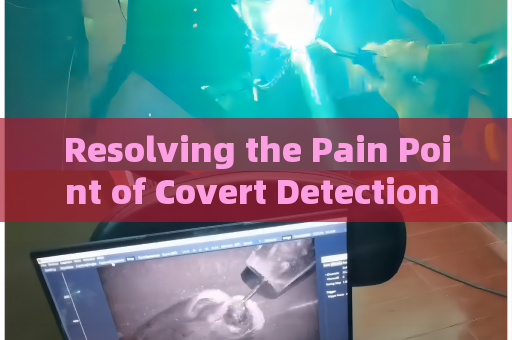
Further operational advantages emerge when dealing with dynamic threats. For example, an illegal fishing vessel might deliberately navigate through a squall line to shake off patrols. The penetration imager maintains functionality in rain rates up to 50 mm per hour, where thermal imagers suffer from absorption and conventional cameras see only a white wall. The operator can track the vessel continuously, zoom into the cockpit to watch the helmsman’s body language, and confirm whether they are lighting cigarettes or preparing to deploy a false flag. The system’s high resolution reveals fine details such as a manifest log or a weapon on the co-pilot seat. Because the laser wavelength is in the near-infrared band, the image is not affected by the vessel’s interior lighting, which often blinds other sensors. The range-gate control also allows the operator to focus selectively on different depths within the cabin—for instance, the forward bulkhead versus the rear door—by adjusting the gate width. This depth discrimination is impossible with any passive optical device. When combined with a stabilized mount and automatic target tracking, the penetration imager becomes a persistent, covert eye that penetrates the last physical barrier—glass—that criminals rely on for concealment. The end result is a drastic reduction in false stops, safer approaches, and higher interdiction success rates for maritime law enforcement agencies operating in challenging coastal and open-ocean environments.




