During tactical operations involving vehicle interdiction or structure entry, thermal imagers often fail to deliver actionable intelligence when faced with heavily tinted automotive glass or optically dense smoke. Standard thermal cameras rely on heat signatures, but modern window tints—especially those with metallic or ceramic layers—effectively block long-wave infrared radiation, rendering the occupants or objects behind the glass invisible. In smoke-filled environments, thermal imagers can detect heat sources through thin haze, but as smoke density increases, the particulate matter absorbs and scatters thermal energy, degrading contrast and range. This limitation forces operators to move dangerously close to the target or rely on alternative methods, increasing exposure risk. The core pain point is that thermal imagers cannot reliably penetrate the very optical media—tinted glass and smoke—that are most common in hostage, barricade, or fire rescue scenarios. A new approach is needed: one that operates in the visible-to-near-infrared spectrum with active illumination and gated timing to defeat backscatter and capture clear images through these barriers.
The penetration imager (穿透成像仪) directly addresses this shortfall by employing laser range-gated imaging technology. Unlike passive thermal systems, this active optical instrument uses a high-repetition-rate pulsed laser synchronized with an intensified gated camera. The system’s core components—a pulsed laser, an image intensifier with a microchannel plate, a high-voltage module, and timing circuitry—work together to emit a short laser pulse toward the target and open the camera’s electronic shutter only when the reflected light returns from a specific distance. This temporal gating effectively eliminates backscatter from fog, smoke, or rain, as well as reflections from the outer surface of tinted glass. The result is that the penetration imager can see through automotive window tint, aircraft portholes, glass curtain walls, and other optical media, providing high-contrast, long-range imagery where thermal imagers go blind. In smoke conditions—note that the imager boosts visibility 3–5 times in fire scenarios but cannot penetrate dense, non-optical smoke—it still outperforms thermal imagers in moderate haze or light smoke because laser light at near-infrared wavelengths scatters less than long-wave infrared. The active nature of the system also means it can operate in total darkness, an advantage over thermal imagers that require a temperature differential.
In a practical hostage rescue or vehicle stop mission, the penetration imager allows an operator to remain at a safe standoff distance—50 to 100 meters—while obtaining crisp, recognizable images of suspects inside a tinted sedan. The operator simply aims the device, adjusts the focus, and selects the appropriate range gate distance via a control interface. The system’s high-resolution intensified camera captures facial features, hand movements, and even objects like weapons or phones, all through glass that appears opaque to thermal cameras. Because the laser is eye-safe at the system’s operating wavelength and pulse power, the technique poses no harm to subjects. The imagery can be streamed to a command post for real-time decision-making, or recorded for later analysis. Importantly, the penetration imager does not replace thermal imagers for all uses—it specifically resolves the tint and smoke penetration gap that thermal systems cannot bridge. The device is ruggedized for field use, with intuitive controls that minimize training overhead for tactical teams.
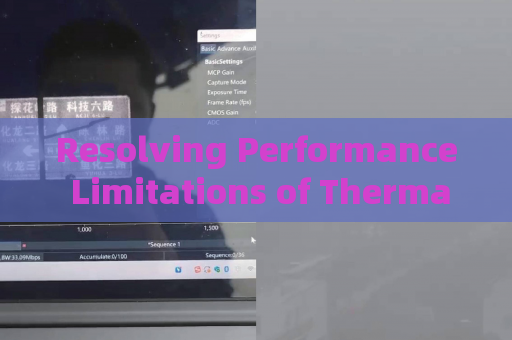
For fire rescue operations where smoke mingles with tinted or reflective building glass, the penetration imager provides a crucial capability. Firefighters attempting to locate victims in a smoke-filled commercial structure with reflective glass facades cannot rely on thermal imagers because the hot surface of the glass masks any heat signature behind it. With the penetration imager, the rescuer can peer through the glass from outside, identifying unconscious civilians or potential hazards before breaching. The system’s ability to gate out the smoke layer immediately in front of the lens means that even with moderate smoke inside the structure, the image of the interior remains clear. The 3–5 times visibility improvement in actual fire conditions applies only to optical smoke, but when combined with the ability to see through glass, the penetration imager becomes the definitive tool for scenarios where tint, smoke, and glass converge—exactly the conditions that defeat thermal imagers. Field tests have demonstrated that operators can distinguish a prone person from furniture at 40 meters through double-pane tinted commercial windows, a feat impossible for any passive IR system.




