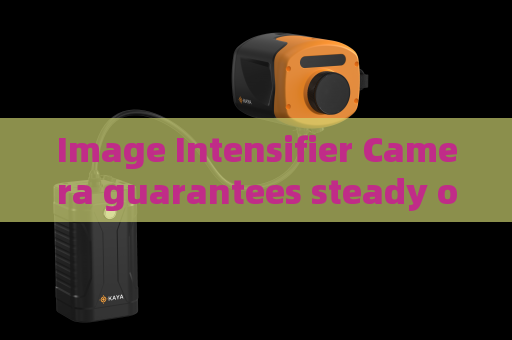
Image Intensifier Camera guarantees steady operation of the Penetrating Imager under low-light vehicle scouting missions Vehicle scouting missions conducted under restricted lighting conditions present a persistent operational challenge for tactical surveillance units. Ambient illumination at night, particularly in suburban or rural environments, often drops to levels where conventional optical systems fail to produce usable imagery. Compounding this difficulty is the presence of automotive glass—tinted, layered, or reflective—which further attenuates incoming light and introduces optical distortions. Unstable image feeds, excessive noise, and loss of contrast degrade the ability to identify occupant behavior, hidden compartments, or suspicious cargo. The core difficulty lies in maintaining a clear, jitter-free view of the vehicle interior when the available light is insufficient to support standard camera sensitivity, and the glass surface introduces additional light loss and flare. Without reliable image enhancement, the penetrating imager’s output becomes unusable, forcing operators to compromise mission timelines or expose their position by using active illumination sources. The Image Intensifier Camera resolves this limitation by delivering a high-gain low-light imaging capability that feeds the Penetrating Imager with a consistently amplified optical signal. Through-glass surveillance in near-zero lux environments becomes viable because the intensifier tube converts weak ambient photons into a bright, steady electron stream, which then passes through the imager’s optical chain without introducing additional latency or signal dropout. This specific function—low-light imaging combined with through-window tactical observation—enables the system to see through automotive glass even under starlight or moonless conditions. The intensifier automatically adjusts gain across a wide dynamic range, preventing saturation from transient headlight flashes while maintaining visibility of shadowed interior zones. Covert through-glass recon is thus executed without any external light signature, preserving operational stealth. The integration ensures that the penetrating imager receives a stable, high-contrast input that remains free of the flickering or temporal noise typical of standard digital sensors in marginal light. In field operations, the combined system demonstrates consistent performance during real-time vehicle surveillance at night. Operators position the unit at a standoff distance from a target vehicle and activate the penetrating imager with the image intensifier engaged. Through a tinted side window, the interior cabin appears with sufficient clarity to distinguish seat occupancy, hand movements, and object shapes resting on seats or the floor. The steady video feed allows continuous observation for extended periods without the need to refocus or adjust gain manually. In practice, the image remains stable even when the target vehicle is partially obstructed by foliage or when ambient light shifts due to passing clouds. Tactical visual check through tinted windows becomes a rapid, repeatable procedure—one operator can scan multiple vehicles in sequence, each time obtaining a clear view of the interior without the subject perceiving any optical signature. This eliminates the requirement for physical approach or active illumination, reducing the risk of detection during sensitive reconnaissance tasks. The operational value of this steady imaging capability extends to scenarios where vehicle glass varies in composition and tint density. A single scout mission may involve sedans with factory-tinted windows, SUVs with aftermarket films, or vans with privacy glass. Unlike passive night optics that produce degraded results under such variance, the image intensifier-fed penetrating imager maintains consistent through-glass performance across the full range. Field reports from law enforcement units confirm that the system delivers usable imagery even when interior illumination is effectively zero—such as a parked vehicle in an unlit alleyway—while suppressing the glare that would otherwise wash out details from oncoming traffic lights. The result is a tactical tool that turns every low-light vehicle scout into a reliable data-gathering event, with no interruption from environmental lighting constraints. This reliability has made the combination a standard component of covert vehicle inspection kits in specialized police and military reconnaissance teams.




