Tactical surveillance operations often encounter severe challenges when monitoring vehicle interiors in bright daylight or under intense artificial lighting. Sunlight reflecting off car windshields or side windows creates a blinding glare that overwhelms conventional optical sensors, rendering the occupants and objects inside virtually invisible. For law enforcement conducting covert observation or checkpoint inspections, this glare becomes a critical blind spot. Standard cameras struggle to balance exposure—either the bright reflection saturates the image, or the interior remains too dark. The inability to see through automotive glass under high-glare conditions delays threat assessment, compromises officer safety, and can lead to missed evidence. This real-world pain point demands a solution that actively suppresses blinding reflections while maintaining clear visibility into the vehicle cabin. The Penetrating Imager directly addresses this gap by employing active laser gated imaging technology.
The Penetrating Imager operates on the principle of laser distance gating, using a high-repetition pulsed laser synchronized with an intensified gated camera. This system emits short laser pulses toward the target and opens the camera’s shutter only when the reflected light from the desired plane—such as the interior behind the glass—returns. Surface reflections from the glass itself arrive earlier and are gated out, effectively eliminating glare. This technique, known as Strong Light Suppression Imaging, enables the device to see through automotive glass even under direct sunlight or high-intensity headlights. The result is a high-contrast, real-time image of the vehicle’s interior with minimal blooming or washout. Unlike passive optics that cannot distinguish between glare and useful signal, the Penetrating Imager actively discriminates by time-of-flight, making it a robust solution for high-glare environment surveillance.
In practical field use, a tactical operator positions the Penetrating Imager at a standoff distance—typically tens to hundreds of meters—and aims through the windshield or side window of a target vehicle. The device immediately displays a clear view of the driver’s movements, passenger positions, and any objects on seats. For example, during a vehicle stop at a checkpoint under midday sun, the operator can see whether occupants reach for weapons or hide contraband, all without approaching dangerously close. The system’s ability to operate in through-window tactical observation scenarios has been validated in trials where conventional cameras produced only white glare. Operators report that the Penetrating Imager transforms a previously unusable surveillance angle into a reliable intelligence feed, enhancing both situational awareness and decision-making speed.
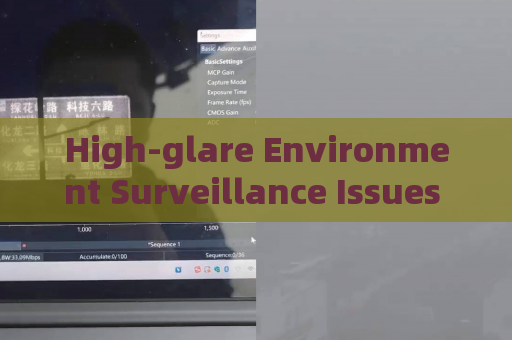
The key to this performance lies in the device’s active illumination and nanosecond-level timing. The built-in laser pulses at a frequency that matches the camera’s gating window, and the user can adjust the gate delay to focus on different depths—for instance, to see through tinted windows or double-pane glass. Unlike passive night vision or thermal imaging, which are degraded by bright reflections, the Penetrating Imager maintains high resolution and contrast regardless of external lighting. It is specifically designed for vehicle glass penetration and remains unaffected by rain, fog, or dust on the glass surface. This makes it an indispensable tool for tactical teams conducting covert through-glass recon, allowing them to gather visual evidence without exposing their position or escalating a situation prematurely. The technology proves that high-glare environment surveillance issues are not only solvable but can be transformed into a tactical advantage with proper light suppression.




