Nightfall transforms urban and rural environments into complex operational theaters where visibility drops to near zero. For law enforcement and tactical teams conducting surveillance, the absence of ambient light presents a critical challenge: suspects often operate under the cover of darkness, hiding behind vehicle windows, tinted glass, or within structures that block natural illumination. Traditional night vision devices amplify existing light but fail when the environment is completely dark, and infrared illuminators risk detection by those with counter-surveillance equipment. The core pain point is the need to observe subjects through-glass covert observation without any external light source—a demand that conventional optics cannot meet without compromising stealth or operational security.
The Penetrating Imager directly addresses this gap through its proprietary Zero-light Imaging capability, which is not a passive light amplification method but an active laser range-gated imaging system. By emitting a high-repetition-rate pulsed laser and synchronizing it with an intensified gated camera, the device captures only the light reflected from the target at a precise distance, rejecting backscatter from fog, rain, or glass surfaces. This enables the operator to see through vehicle windows—including heavily tinted automotive glass and aircraft portholes—without illuminating the scene in a way that would alert the subject. The system operates in total darkness, relying on its own pulsed laser source rather than any ambient or artificial lighting, making it ideal for covert after-dark operations where any glow or beam would compromise the mission.
In practical field use, a tactical team positioned hundreds of meters from a target vehicle can deploy the Penetrating Imager to identify occupants, observe hand movements, and assess potential threats through the windshield or side windows. The operator simply aims the unit, adjusts the gate delay to match the distance to the glass surface and the interior beyond, and receives a high-contrast, real-time video feed on the display. Because the laser pulse duration is measured in nanoseconds, the system effectively "freezes" the motion of the vehicle’s occupants while eliminating glare from headlights or street lamps. The unit’s Strong Light Suppression Imaging ensures that even if the target vehicle’s interior lights are on, the operator’s view remains unobstructed—a critical advantage when monitoring suspects during a vehicle stop or a static stakeout.
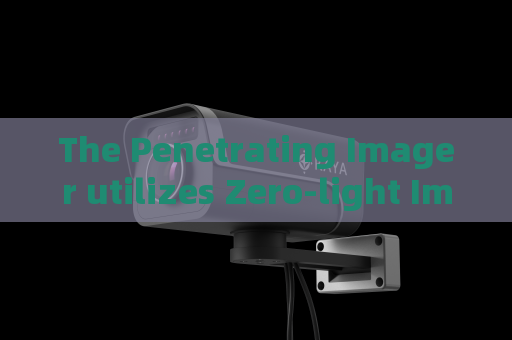
The tactical value extends beyond vehicle surveillance. During a nighttime operation in a suburban area, the same imager can be used to peer through glass doors or commercial shopfronts without the subject realizing they are being watched. The zero-light requirement means no telltale infrared glow is emitted, and the laser’s narrow bandwidth prevents detection by common night-vision goggles worn by adversaries. Operators report that the system’s ability to penetrate heavy fog and rain further enhances its reliability in adverse weather, a common scenario for after-dark reconnaissance. With a typical effective range of several hundred meters, the Penetrating Imager gives command teams a decisive information advantage: they can confirm the presence of weapons, count subjects, and assess the tactical layout before making entry or initiating contact—all without breaking the shield of darkness that both sides rely on.




