In tactical surveillance scenarios, law enforcement officers often face the challenge of observing subjects inside vehicles through tinted or reflective windows. During daylight hours, sunlight bouncing off automotive glass creates intense glare and mirror-like reflections that obscure the interior. Standard optical devices, even those with high dynamic range, struggle to capture clear facial features or objects behind such glass. The problem intensifies when officers need to assess threats—such as an individual reaching for a weapon—without revealing their own position. A security camera or binoculars positioned at a distance cannot penetrate the optical distortions caused by strong ambient light, leading to missed critical details and compromised situational awareness.
The Penetrating Imager adopts Strong Light Suppression Imaging to keep stable picture quality in these exact conditions. Unlike conventional systems that wash out under bright illumination, this active imaging device uses a pulsed laser synchronized with a gated intensified camera. By timing the laser pulse to match the round-trip travel of light reflected from targets just beyond the glass, the system selectively excludes the overwhelming majority of surface reflections and backscatter. This through-window tactical observation capability allows the operator to see through automotive glass, including heavily tinted or sunlit panels, with consistent clarity. The imager’s narrow temporal gate effectively rejects the glare that blinds other optical tools, delivering a stable, high-contrast image of the vehicle’s interior even when the sun is directly behind the glass.
In practical deployment, the Penetrating Imager enables covert surveillance at standoff distances. An officer positioned 50 meters away can point the device at a suspect vehicle and obtain a crisp view of the driver’s hands, the passenger compartment seats, and any objects on the dashboard—all without moving closer or drawing attention. The imaging remains steady whether the scene involves bright midday sunlight or flickering headlights at dusk. Because the system relies on optical gating and not on heat or sound, it avoids the limitations of thermal imagers, which often fail through glass, and of radar-based devices, which are inappropriate for see-through-glass tasks. The operator simply aims, adjusts focus, and reads the real-time feed on a handheld display, ready to relay intelligence to the tactical team.
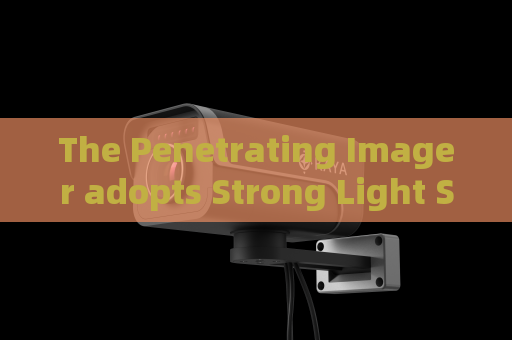
The Penetrating Imager adopts Strong Light Suppression Imaging to keep stable picture quality, and this feature directly addresses the recurring problem of glare-induced blind spots during vehicle surveillance. In one documented use case, a SWAT team used the device to confirm that a barricaded subject was alone and unarmed behind the windshield of a parked car, despite the vehicle’s reflective side windows. The continuous, jitter-free video stream allowed the command post to make a precise entry decision without exposing officers to an ambush. By suppressing the very strong light that defeats conventional optics, the imager turns a common environmental nuisance into a controlled tactical advantage, ensuring that no critical movement inside the vehicle goes unnoticed.




