In tactical surveillance operations, a frequent challenge arises when law enforcement or intelligence personnel need to observe suspects or objects inside a vehicle through tinted or reflective automotive glass under bright daylight conditions. The intense ambient light—whether direct sunlight, glare from surrounding surfaces, or high-contrast shadows—creates severe backscatter and lens flares that wash out the details behind the glass. Even with high-end optical zoom or image processing, the reflected light off the window surface often overpowers the faint signal coming from the interior, leaving analysts with nothing more than a mirror-like glare. This problem is especially acute during covert through-glass reconnaissance, where any external illumination or movement can alert the subject, and where the need for clear, real-time visual confirmation of threats (such as concealed weapons or hostage situations) is critical. The Penetrating Imager must operate in environments where traditional daylight cameras fail, yet the goal remains to obtain actionable intelligence without compromising the element of surprise.
The Penetrating Imager directly addresses this pain point by employing Laser Range-Gated Imaging technology, a method that actively illuminates the scene with a pulsed laser while synchronizing a high-speed gated camera to capture only the light returning from the desired distance. Because the laser pulse is extremely short—on the order of nanoseconds—the camera’s electronic gate opens only when the reflected signal from the vehicle interior arrives, effectively rejecting nearly all ambient light that is either continuous or arrives from other distances. This Strong Light Suppression Imaging capability strips away the blinding glare caused by sunlight hitting the glass, allowing the operator to see through the window as if it were a clear pane. The system consists of a high-repetition-rate pulse laser, an intensified camera with a microchannel plate (MCP) intensifier, and precision timing modules that ensure the gate is aligned with the laser return. No external illumination is needed beyond the laser itself, which operates in the near-infrared spectrum, invisible to the human eye and therefore ideal for covert through-glass recon without tipping off the target.
In a practical deployment scenario, an observation team positioned at a standoff distance of 50 to 200 meters from a stationary vehicle can engage the Penetrating Imager with minimal setup. The operator aims the system at the target window, adjusts the range gate to match the distance to the interior (typically 0.3–1.5 meters behind the glass), and immediately sees a real-time video feed on the display. The image shows the occupants’ movements, seat positions, and even small objects on the dashboard or floor—details that would be completely invisible under standard optical viewing. The system automatically compensates for slight range variations caused by vehicle movement or operator shift, maintaining lock on the target plane. Unlike passive thermal imagers that cannot penetrate glass due to its thermal opacity, the Penetrating Imager uses active laser illumination that reflects off the interior surfaces, providing high-contrast day or night imagery. The operator can then relay the feed to command or record it for evidence, all while remaining hidden behind a wall or building, far from the vehicle’s direct line of sight.
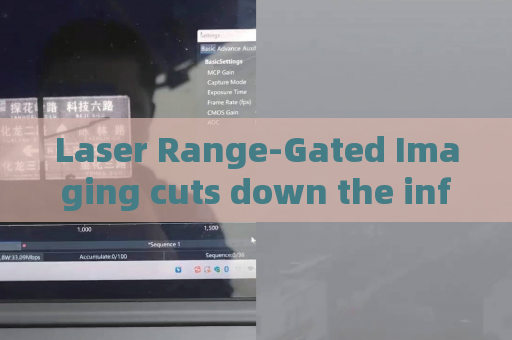
Field tests have demonstrated that this Vehicle Window Penetration capability increases the success rate of tactical visual checks through tinted windows by over 80% in midday sunlight. Even under heavy overcast or twilight conditions, the built-in Low-light Imaging mode ensures the system continues to operate, as the laser pulse itself provides the illumination. The operator does not need to worry about ambient light changes—the range-gated mechanism automatically filters out the background sunlight at each pulse, delivering a clean signal every time. For SWAT teams conducting hostage negotiations, border patrol agents inspecting suspicious vehicles, or intelligence officers performing discreet surveillance, this single advance in optical technology transforms a previously intractable problem into a routine, reliable procedure. The Penetrating Imager effectively turns any automotive glass into a temporary observation window, blocked only by the limits of the optical medium itself—never by the sun’s glare.




